
Paradigm Shift

ParadigmShift.jpgThis last week David Cameron announced that we would start tracking a happiness index. I watched the Politics show and the politicians, including those on his party, all made a joke about it. This was a very poor reflection on them and their lack of knowledge or free thinking.

A happiness index is a step in the right direction and perhaps a move away from the infinite growth paradigm which is what we need. These politicians, who poo poo’d this idea are very ill informed. The idea of measuring happiness has been around a while. It was introduced in Bhutan back in 1972 and has been adopted by other countries since. Even places like Princeton are publishing books on the matter.

Just because something is difficult to measure doesn’t mean your shouldn’t. We measure Gross Domestic Product (GDP) as if it is somehow accurate, I don’t believe this is any better than a measure of  happiness in it’s accuracy (I will come to this later). If these politicians were a little better informed they’d have read about “affluenza” and studies done that measure nations feeling of well being that clearly demonstrate the pursuit of wealth does not make people happy.

We all know this. So why do we let out politicians drive our countries policies with this over-riding aim of growth. It’s because we live within a given paradigm, we’re brought up with it’s underlying features such that, for most, they are unquestionable. We need lost of people to start questioning all those things you just take for granted.

Paradigm • a worldview underlying the theories and methodology of a particular scientific subject :

What we need is a fundamental change in the paradigm we use for the way our world works. The problem is that any solutions that are offered are always framed within the current paradigm. It’s the current paradigm that is wrong.

What is this paradigm? It’s the belief that we need growth. As in my previous post we see why because of the way our money works ongoing growth is absolutely required. Without it the financial system falls apart (as can be seen happening right now in the EURO. Don’t believe we’re any different – the UK, US, China everyone is heading the same way). Thus a paradigm shift requires a change in the way money works.

Why can’t growth continue ? Because the world is FINITE. We will run out of resources if we continue to consume more (ie have growth), no improvement in efficiency can get over a limited resource, ultimately the only sustainable approach is to use renewable resources at below the rate they renew and any use of non renewable will ultimately mean they run out. Not perhaps in our lifetimes but think of your descendants. The problem with the paradigm of growth is that it results in the sensible approach to finite resources is to use them up as quick as possible. You see it all the time, with oil, gas etc… it’s get it up out of the ground as quick as possible. Sit and think. Thats utterly ridiculous. You wouldn’t look at your savings account and say the most sustainable approach to that is to spend it as quick as possible.

Continual growth is just not natural. Whether it’s an animal growing, a glacier expanding or an animal population growing in a region. There is initial growth then stability. We need to find stability. This requires us all to learn to be happy with what we’ve got rather believe happiness is gained by pursuing what we don’t yet have.

Governments aim for growth. By this they mean ever increasing GDP. We triathletes know that using an incorrect measure can result in unfortunate consequences. For instance if you’re trying to improve your performance and use hours trained as your metric. IE growth in hours is your target as a proxy for improved performance. This will probably lead to excessive fatigue. What you need to track and try and improve is performance and need a measure for that.

So GDP – is this a good thing to be driving policy ? Even if we ignore that ongoing growth (infinite growth) is just not possible it has other flaws

  1. It says nothing about distribution of the growth. So you can have growth even if it’s all in the hands of a few.
  2. It makes no distinction on what money is spent for. So £100k spent knocking a building down contributes the same as £100k building one.
  3. It ignores all non monetary transactions. So self sufficiency is ignore and thus discouraged by the system. You grow your own veg, cook at home rather than eat out, make your own furniture your not helping the country grow. Any barter transactions are ignored.

I could go on. It’s a hugely flawed measure of “growth” but is absolutely required by our current paradigm. Since the monetary system requires growth in cash transactions to maintain itself. It doesn’t care whether you borrow money to knock something down or build something as long as you can pay back with interest. Just look round London and how often a building is knocked down to build another – anyone that believes this is sustainable has a screw loose. Yes it’s currently profitable but thats our problem.

Profit motive, of course, its with our paradigm. It’s required for growth and to pay interest. So many people think it’s for the good – gives better cheaper products. I would challenge both these ?

  1. Better ? For some that can afford it but for the majority they get cheap low quality products.
  2. Cheap ? Cheap because companies do not include all costs. For one they never required to price in the damage they do to the environment.

The profit motive lead to division of labour which general means boring less satisfying work. This leads to automation (only achievable due to our current era of very cheap energy – ie cheaper than human labour) meaning less jobs. Finally this cheap energy allows globalisation which means more loss of jobs and less variety.

The profit motive has, massively, benefited a small minority but not the majority.

This idea that endless growth is unsustainable is nothing new. Back in 1972 scientists modelled it and published Limits To Growth. We’re not talking some hippies, or conspiracy theorists we’re talking straight forward scientists creating models to try and better understand the world. They published a 30 year update which is an excellent read.

We need a change in view. Not for profit. Not growth. Not earn interest. What is the solution? I have ideas but I don’t know. I used to think that to say something is wrong you should have an alternative. I don’t believe that now.

It is possible to see that something is wrong without have a solution. You can know we need something different without knowing the precise thing we need. This I believe is the great thing the Occupy movement has done. It’s not offered a solution it has just said there is something wrong. They recognise that other minds may be more able to come up with the solutions and how to transition from the current paradigm to the new. For now we need to raise the debate, get people thinking and hopefully solutions will arise. Perhaps some of these Investment Bank quants will decide they’ve got enough money, they’ll get over their greed and apply their brain power to finding a solution.

Measuring the nations happiness even if not completely accurate may be the start to directing government policy towards more appropriate goals than just growth. It’s a tiny step but it could be a start.
Posted in Collapse, Critical Thinking | Tagged | Leave a comment

Kona

This year both Chrissie and Crowie looked completely spent on crossing the line at Kona. Stories abounded of pro’s hardly able to walk the following day and certainly many of my friends suffered from “cankles” the next day. For me I was walking freely but that hid the truth of my day where I’d had the most extreme emotions of any Ironman I’ve completed.

My day started with the usual tension at the start. There is nothing like this anywhere else I’ve been on the Ironman circuit.  Over the years I’ve learnt how to deal with it, a big part of which is being on the start line with friends. This year I had two with me and made the best start and the strongest swim I’ve had. I can’t remember enjoying a swim so much. I even looked at the fish at one point.

My frame of mind leaving T1 was perfect, I felt confident, in control and that I’d hardly exerted myself during the swim. Control and confidence continued through the bike to the Hawi turnaround at which point I was ready to pick it up when back on the Queen K. It didn’t happen, the engine room just didn’t have it. Despite knowing from bitter experience what the last 40km is like if you’ve nothing in reserve I’d gone and done it again. By the time I was approaching T2 I didn’t want to run. A bad sign.

Transitions at Kona feel wired. This was no different so I focused on not rushing to ensure I got my Vibrams on correctly. I drank lots of water and made sure my arm coolers were soaked before heading up Palani and on to Ali’I Drive.

It was hot. My heart was racing but my pace wasn’t in line. This can be common but I felt hot and decided I must cool myself down. It meant walking through aid stations getting water and ice to put on my arms and legs. Each aid station I felt better and between the stations my running improved. The Ali’i section is good fun as it’s scenic, well supported and you get to cheer all your friends out on the course.

On The Queen K I continued to feel better but still walked aid stations. I saw the lead ladies coming in and gave all the Brits a big shout, three in the top five with Rachel looking able to close in on fourth. Next come the top age groupers hardly looking different from the Pros. After that it’s my first friends and a chance to give a cheer. I’m still running well so they’ll expect me back not too late.

Coming out of the Energy Lab and back on to the Queen K with about 7 miles I felt confident I could push for home but when I tried I ground to a hault. Even now I can’t pin point exactly why. I had no cramp, my feet weren’t sore, I didn’t feel out of fuel I just couldn’t keep running. My legs ached so much and the only thing that stopped the ache was stopping. I stopped a few times. Slowly my brain would click in “you’ll never finish if you don’t move forward”. Off I go again. 15 min / KM … so that’s nearly 2 hours despite the volunteers screaming “nearly there”. I try running. It feels easier, why don’t I do this. Funning faster seems even easier. Then 500m later I’m walking again. It didn’t even feel like a conscious decision, just my body started walking.

This was hard, very hard and emotional. For several aid stations I had my cap down, head down in tears. Not sure why but it felt better to let it out. It only happened when people were around so I feel was due to the kindness of everyone. Saying how great you look, even though you don’t and encouraging in just the right way. I still had no idea whether I could finish this. Even with 2 miles to go I wasn’t sure I could complete the distance. Any other day I would have called someone to come pick me up.

I dropped down Palani, and within a mile am walking again. For some reason I start to think about my dad and wondering if he’s watching. I feel sad he never saw me race and wonder what he’s have thought of it all. It’s cap down, head down, sobbing my eyes out. It felt very special. An enormous release and I felt so close to my dad.  Once on Ali’i drive I remember to take it all in, I look up, start to smile, take in the crowds. This is amazing. I want to come back for more.

Posted in Kona, Triathlete Europe | Tagged | Leave a comment

Money

Money1.jpgEver thought about how money works or what it is ? £ – “Pound Sterling” – it used to be a pound of sterling silver and you could have gone to a bank and asked for your silver. You may remember or been taught about the Gold Standard and how this was abandoned.
In order to fully understand the crisis humanity is facing it’s critical to understand how money works. I’ve long had an interest in economics, I have an economics a-level, a maths degree, qualified as an accountant and spent 15 years working in an investment bank in Interest Rate Derivatives and still the way money works sometimes messes with my mind. So here’s an attempt at explaining how money works.

There are three major features of our money are:

  • Fractional Reserve Banking;
  • Compound Interest; and
  • Fiat currency

To explore the implications of money I spent a lot of time thinking through a scenario which I called “Lordy World”. I originally included it in this post but my sister felt it got a little complicated so I’ve separated it out. I will provide links to it rather than include directly here.

LORDY WORLD – introduction

Fractional Reserve Banking

When banks take a deposit they only have to keep so much of it (the reserve amount) the rest can be leant out. So say you deposit £100 with your bank they can lend out £90 (given a reserve requirement of 10%). They are reliant on all depositors not wanting their money back at the same time as they will only ever have about 10% of total deposit available. This is how runs on banks happen – if depositors start to worry about the solvency of a bank they may start withdrawing money. After a certain length of time the cash deposits at branches will be gone further fuelling the panic and more people will try and get money out. The bank will get more cash but at some point they will run out of reserves and not be able to pay any more.

fractionalreservebanking

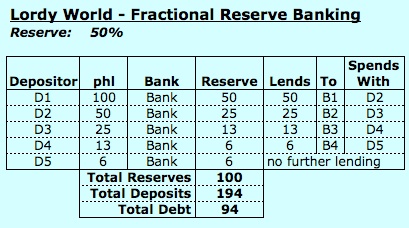
The full implications of Fractional Reserve Banking are not immediately obvious. Say Bank A gets a deposit of £100 and lends out £90 keeping £10 in reserve. The person borrowing the money is clearly going to spend it (why else borrow) so the money ends up in someone else’s hands and ultimately as a deposit in a bank, say Bank B. Now Bank B has got £90 so they loan out £81 and keep £9 in reserves. Now note that there is still only £100 total money but Bank A has £100 deposit and Bank B has £90 deposit. The owners of deposits have £100 and £90 each. If they both go to withdraw that money from their banks there is clearly a problem – they demand £190 in cash but only £100 exists in total. This table above illustrates how this works.

Given £100 pound initial deposit and a 10% reserve requirement (I believe this is approximately what most western economies require) this can result in £1,000 of deposits existing via this process. Crazy stuff right !

Note that this can be backed out if a nice orderly repayment of loans happens. There is enough money in the system for all this to work.

Imagine what this means for our banking system as a whole. Imagine what happens if even a small proportion of total deposits are demanded in short order (say more than 10%). One way to tackle this comes as a result of moving to FIAT currency, which we will come to later, but that has it’s own set of implications.

This is already pretty scary before I even add in Compound Interest.

Back to “Lordy World”

Compound Interest

This is something we’re all brought up with and just take for granted. Logically you would think you would pay a bank to safeguard your money. In the times of gold (no paper currency) you can imagine that would be reasonable – pay a bank a monthly fee to protect your money. Once you introduce FIAT currency (see below) and fractional reserve banking it becomes a little less important, in fact if a bank is only holding 10% of your money most of it isn’t available to steal. In todays world where it’s just a bit on a computer even less so. With Fractional Reserve Banking you can see why you get interest – the bank is paying you because they can then lend your money out. They lend it out and earn interest meaning those borrowing must make a profit (either through a business venture or working to pay off the loan plus interest). Hopefully you see that implicit in this is the need for growth. Perhaps they also paying you to take the risk that your money won’t be available when you want it, though this is certainly not made clear to the average depositor.

I want to make this clear. Once you charge interest that is creating money and at any one time there isn’t enough money to pay it all back. Look back at Fractional reserve banking – £100 deposit with 10% reserve could create £1,000 of loans. Say interest is 5% (lets ignore compounding – it just makes it worse anyway) which means £50 of interest. Now without interest all those loans can be repaid with only £100 money in circulation but where will the £50 comes from – we need continued growth for this to work.

Think about it you deposit money and it just keeps creating more money. Money grows infinitely. Whats even better everytime a borrower pays interest the bank can lend 90% of it out and via fractional reserve banking the increase in money is 10 times the interest.

For example if we deposit (of course it works just the same for a loan it’s just banks unlike depositors won’t just wait and let it accumulate without getting some of it paid) £1 at 2% interest:

  • After 1 year we have £1.02
  • After 10 years we have £1.22
  • After 100 years we have £7.24
  • After 1,000 years we have £398,264,652

And after 10,000 years we have about £100 Sextillion Vigintillion (thats 100 with a further 84 zeros).

There’s that crazy exponential growth again. You may say well thats daft you won’t keep it deposited for that long. If you think I won’t then why wouldn’t I ? Or are you thinking well the banks won’t be around that long. If so I agree … but if you think that do you assume it will happen in some far distant future and not tomorrow?

If we think back to when money had some physical meaning to it (say gold) then compound interest would mean depositing gold created gold ! Well, at least from the depositors perspective. Whats happening in the background is that the bank loans it out and charges interest (ie more gold) so it’s all reliant on the borrower producing something that will result in more gold to pay back the loan plus interest or gold would have to increase in value.

Back to “Lordy World”

FIAT CURRENCY

The best definition I can come up with is “money without intrinsic value”. Though the pound in your pocket may have historically represented a pound of sterling silver and you could have gone to a bank and redeemed it for the silver that is no longer the case. The £1 in your pocket represents nothing other than a promise that you can exchange it for some good or service. The value of money is completely based on trust. There’s trust that at the time you chose to spend it that the seller will accept it. This trust can fade or disappear. Take countries that experience hyperinflation – the value of the money in your pocket decreases rapidly, people lose faith in it and fewer and fewer people accept it reverting to barter or other currencies.

The key thing with FIAT currency is that without any link to something physical there is, in theory, no limit to the amount of money that can be printed. In fact, economists that believe in infinite growth (which really is all you hear in the mainstream media since every expert tells us we need to have economic growth) are reliant on being able to have as much money as required. It’s also one of the reasons government debt is so secure because they could just print money to pay it off. Heard of “Quantative Easing” ? Well, thats printing money which is used to pay off govt debt. By buying back govt bonds from banks they inject more money in to circulation as it allows banks to lend out. The problem here is that printing more money has not increased wealth at all, it’s merely devalued all money – it is inflationary.

Back to “Lordy World”Back to “Lordy World”

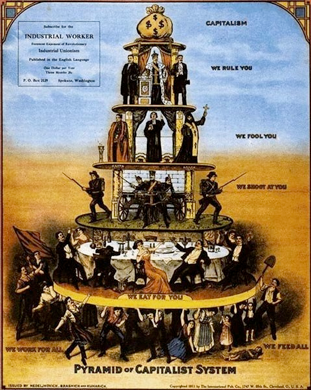
Now lets put this all together. We have individuals, businesses and governments borrowing money. Due to compound interest they all have to add value to pay back the interest. This requires an ever expanding economy. On top of this we have Fractional Reserve Banking – it means any interest paid on loans is multiplied up to create even more money to loan out and charge interest on. For this to keep working economies have to keep growing. If you’ve ever heard of banking as a huge Ponzi (pyramid) scheme you can now perhaps see why. What happens if individuals can’t pay their interest or debt ? Or governments for that matter. What could cause that ? Lack of economic growth over an extended period ? Whats happening now ?

Growth is something I will blog about shortly but for now just look at those numbers above which demonstrate how growth progresses at 2%. I picked that percentage because thats the target growth rate regularly touted by economists and politicians. Surely I don’t need to site Peak Oil for you to realise growth cannot go on endlessly. Anything in nature has a period of growth and then becomes stable. Why do we not believe this is the case with economic growth. IT MUST STOP. Unfortunately the way money currently works has endless growth as implicit within it. Conventional economic thought believes this can continue due to efficiency & substitution which means they believe we will get ever more efficient in our use of resources (The Faith In Technology) and also as something gets more expensive we will find or make a substitute. Unless the substitute is sustainable it will, of course, also have a limit.

This post hopefully gives you something to think about in terms of what will happen to our current financial system when it growth does stop. Think about the current EURO crisis. Don’t observe that and think ah poor them. We (UK) are in no better state, neither is the US or China (who Europe are turning to to bail us out!)

Posted in Money | Leave a comment

Lordy World – FIAT Currency

The bankers notices that as the economy has evolved absolutely no one ever comes and redeems PHLs. There no longer seems any point since they can just deposit them and earn interest. PHLs have been so successful people are no longer viewing them as worthless paper but as valuable in and of themselves.

They take the final step and say that you cannot redeem them for hours, they are now FIAT. Their value is based on trust and the backing of the community through the Central Bank.

For the bankers this removes the final bind. They are now free to print more money and leave it in circulation as there is no connection with anything physical. As the economy grows there is need for infrastructure to be built for all. A government is formed to co-ordinate this and given rights to raise taxes to pay for the work. For big big projects they go and borrow from the bank and pay interest from their tax revenues.

Please observe

  • Growth is even more inherent in this system now as the government is paying it’s interest charge out of Tax revenues so it needs those revenues to increase
  • Money can now be quite literally printed. This is what makes government debt so safe, they can always print money to pay it.

This brings me to Quantative Easing which is a posh name for printing new money and injecting it in the economy somehow. I want to illustrate this in two ways – an unrealistic way (perhaps) which should illustrate it’s effect and how it is being done currently.

Scenario One – The central bank prints a load of new money and distributes it equally to everyone. Potentially it has no impact, everyone buys the same things and ends up with surplus cash and deposits it. Alternatively (more likely) people can now afford products they didn’t used to, or can afford more resulting in shortages which pushes up the prices which can be paid as everyone has more cash. We have inflation.

Quantative Easing is inflationary.

Also note that a large proportion of this new cash ends up deposited at the bank which can then leverage it up by lending it out using Fractional Reserve Banking. Thus the total increase in money is much greater than that printed.

Scenario Two – the Central Bank prints money and buys back some of the government debt from the Bank. This means the bank has increased reserves, reduced it’s lending and thus credit availability increases. He can lend out more allowing more people to borrow to produce things or buy things. Thus increasing money in the economy. This still increases money in circulation running the risk of inflation. Of course if there is general inflation this reduces the real cost of all debt thus making it easier for the government to pay back it’s debt.

Posted in Money | Leave a comment

Lordy World – Compound Interest

With time our Bankers notice that often loans aren’t paid back on time. They decide to reflect the different times taken to repay they should charge interest rather than a fixed fee. The depositors hearing of this move demand a cut of the interest. The bankers now make their money from a difference in the rates they charge vs what they pay.

Now merely owning money can create wealth. Slowly many people decide to pursue amassing money as a goal in itself as that money can earn them more money reducing their need to work. Some observers say that greed has entered the system.

Some observations

  • Even more money is now being created out of thin air. The interest on deposits can be just created provided the bank has enough reserves. Note this is now compounding and thus infinite. Anyone just leaving their money there will have it increase in size exponentially.
  • For the bank to indefinitely continue to pay these ever increasing deposits they will need two things – ever increasing lending and ever increasing money supply
  • Increasing money supply requires either reducing reserve requirements (which is ever more risky) or increased availability of the underlying (ie growing population). It should be noted that every bit of interest paid by a borrower is extra PHLs that can be leant out. With the 25% reserve this means every PHL paid in interest increases available credit by three times that amount. The ability to increase the money supply make cease as you can’t force people to deposit time and though in theory you could take the reserve to zero (infinite credit) it clearly wouldn’t work. The only possible solution would be to devalue the PHL ie 1 PHL now represents just 30 minutes. This leads us to the final piece – FIAT currency
  • This requires continued growth to be viable
  • Unravelling this as we did in the previous case is vastly more complicated.
  • Growing population is OK to a point but this community can only support so much population and thus there is a strict limit to growth.

It’s interesting to think how this world would approach it’s limit, what would happen and how they could adjust to it. I am not planning to explore that here.

Posted in Money | Leave a comment

Lordy World – Fractional Reserve Banking

PHLs prove a great success. Most people deposit their week of time and the money supply stabilises. Few see any need to redeem PHLs, instead they work for someone else to earn PHLs or have a business that sells something for PHLs. People tend to hold on to a few PHLs just in case. In time the idea of a PHL bank is put forward for the safe keeping of PHLs. The community feels it best for this to be separate from the Bank so they rename that the Central Bank and a new Peoples Bank is opened to take there deposits. Again the person running the bank is paid a salary by depositors for the safeguarding of their PHL deposits.

The owner of the peoples bank notices that most deposits remain untouched and comes up with a cunning idea. Rather than the depositors paying him to safeguard them he will instead safeguard them in return for being allowed to lend their money out. He earns by charging a fixed fee (say 1%) for lending out money. He agrees that a certain amount needs to be kept at the bank in case someone wants their PHLs. He calls this his ‘Reserve’ and decides to set it at 50%.

fractionalreservebanking2He lends out 50% of the deposits which gets spent and re-deposited with him. He can lend out 50% of this new deposit. Before long he’s lent out ever smaller amounts and hits the limit of his lending having more or less doubled the level of deposits. (see the table left that illustrates how this works). This means the people as a whole feel they have double the amount of money but in fact there is only the same number of PHLs (ie actual hours deposited). It means that if all of them tried to remove their money at the same time the bank has a big problem. Before I address this specific problem I’d like to illustrate how, in theory, this could unwind itself:
Looking at the chart all the borrowers could sell there products (which they borrowed to produce) for phl 100 to D1 (who removes his deposit to pay them – strictly speaking at this point the bank has broken it’s reserve requirement as all it’s reserves are gone but lets assume all the transaction happen in short order) allowing them to pay phl 1 to the banker (his fee), pay off all debts and make phl 5 profit. D1 would have zero deposit. There would be no debt. Leaving phl 94 deposits, phl 1 with banker and phl 5 with borrowers, totally phl 100 which is what we started with.

This shows how it can work, allowing people to get access to PHLs as they require. Soon, our, now two, bankers, realise that they could increase money circulation if they reduce the reserve requirement however the more they do this the more they run the risk of demands for deposits exceeding the reserves which could result in a run on the bank (loss of confidence) and in turn could bring down the whole system. The Bank can’t print money to address this BUT the Central Bank could especially as he’s realised that PHLs are hardly ever redeemed. He could help the Bank overcome any short term liquidity problems he has by simply printing more PHLs. He could work with a reserve he has to keep against redemptions. Provided this reserve is prudent enough he should be OK (say 50%). Lets walk through how this would work.

The Bank goes to 25% reserve which means he can lend out 3x the deposits he has which he does increasing the money supply to 400% of it’s original. He then finds that 30% of the deposits are demanded so he goes to the Central Bank who prints the extra 5%. Now there are more PHLs in circulation than hours deposited but as long as everyone doesn’t decide to redeem at once it’s ok. In short order the liquidity problem at the bank passes (eg deposits made, debt repaid, fees paid) and he can repay the money to the Central Bank plus his fee.

Again lets make some observations

  • We now have hours somehow creating more hours. Since the bank lends out PHLs and gets those back plus a fixed fee. Where are those extra PHLs (hours) coming from ? The banker has done nothing of intrinsic value. He’s reliant on the borrower using the money to produce something she can sell for more PHLs than she borrowed.
  • Growth is now needed by this system to pay of the debts. In this scenario have we had growth ? Here I mean in a more general sense (rather than increase in GDP). Say the borrower made something, for example a chair. At the end of the scenario there is still the same money in existence plus a chair which has some worth – hence the economy grew.
  • Growth is limited provided it’s assessed as growth in overall wealth. Given the chair example once everyone has enough chairs thats it. If you measure growth based around money changing hands (as our financial system does) then if someone chucks out their chair and buys a new one that could contribute growth.
  • Increased money supply is based on creation of credit. Lowering the Banks reserve requirement increases the amount of money available. Adjusting the fixed fee charged for credit can influence how much available credit is taken up.
Posted in Money | Leave a comment

Lordy World – Introduction

Despite believing I had a good understanding of money this exercise took far longer than I expected largely because I tried to think it through with a simpler case “Lordy World” but as I explored the implications of the features of money it just kept messing with my mind. “How can this really work?” There appeared to be flaws all over the place. With this in mind I hope Lordy World will really make you think. The fundamental features are correct but you will see that the implications are mind boggling.

[ASIDE: I spent a lot of time thinking about what was a good currency for this, looking for something everyone could get and could split in to small parts whilst being limited in availability. You may think an idea is original but it rarely is. Also, today at the cinema I saw a trailer for “In Time” which looks to be based on this kind of idea]

Imagine a small area of land surrounding a market town such that everyone can get to the town and back to exchange goods. There is no contact with other communities everything consumed and produced is done so within this land and done sustainably. The land has rich soils and extensive forests. People meet everyday to exchange goods by barter. Some people produce goods others work for people in exchange for goods. The main form of energy is human work and sunlight.

It is noted that the barter system makes getting what you need in exchange for what you have oftentimes hard, convoluted and sometimes impossible. A bright spark in the community comes up with this idea of a medium of exchange. He decides, for good reasons, to have the medium of exchange related to human work so he thus introduces the “Person Hour Lordy” – each note represents an hour of human labour. If needs be smaller coins will be produced representing a man minute. Though not strictly fungible (ie an hour of person As labour is not the same as an hour of person Bs) they more or less are and if there is a problem they can work on standardisation (eg we have a standard person hour and each person will have an equivalent – eg for person A 45 minutes is equivalent to a Person Hour Lordy, person B is 1h15. Periodically these factors could be reviewed) [for my illustration this fact is not that important] He decides to call this idea “money”

How does money get in to circulation ? They set up a central body which he calls the Bank. From here you can deposit your time and get fungible Person Hour Lordys (quickly abbreviated to PHLs). Rules are in place so you couldn’t deposit more hours than could be redeemed in a certain time frame (eg a 35 hour work week). The Bank would keep accounts so they knew who had deposited hours of labour and handled any redemption of hours. The guy running the bank is paid in PHLs by the producers since his services are helping facilitate the trade in their products.

If you have PHLs there are three things you can do

  1. Hang on to them to buy products later
  2. Redeem them at the bank. This means you get hours of someones labour it could be your own if you deposited hours or someone elses

It’s important to note some features of this system:

  • money is linked to something of intrinsic value and of limited supply.
  • the money in circulation is limited by the population and the maximum number of hours you can deposit.
  • the banker cannot arbitrarily increase the money in circulation. He could increase the limit on time deposits which increases the maximum but it would still require people depositing time to increase the money supply.
  • given the closed system we have and the limit on money supply general inflation cannot occur. If some products went up in price others would be cheaper or unsold since  there’s only so much money. So much like a barter system prices will fluctuate based on relative availability but there can’t be a general rise in prices. (NB – for years and years nations for all intents and purposes were not in a closed system with the mass of the world to expand in to and lots of room for population growth. However, the World is a closed system and with globalisation and population growth we are now starting to hit the limits of this closed system)
Posted in Money | Leave a comment

Lifting The Veil

LiftingTheVeil.jpgThis weekend I went to Wembley to watch an NFL game. It was a great to celebrate the end of the season with one of my athletes who, in his first season of Ironman completed three Ironman races and a 50 mile run race ! There was no shortage of razzamatazz and over the top consumption. Whilst watching the game and felt I had some clarity come to my thinking.

Firstly it became clear that Ironman UK next year is probably the right move. It may be only 2 weeks after Roth but more importantly it’s 1 week before the Olympics. It means I’ll be ideally placed to watch all of the Olympics and it should guarantee me doing recovery.

Secondly I realised that I’m between the anger and acceptance stages of grief. I still find myself very angry indeed when I think of the time that the evidence has been there that we are heading to collapse but our leaders (both political and business) just continue to be insanely greedy. The continue to push growth as the answer, to support a system that has implicit in it the need for growth (greed ?) and a system that ensures that from a young age we are all indoctrinated in to this system of greed so we can hardly even question it when we get older. I will blog on this more in the next few weeks.

More of the time I am closer to acceptance as I find myself observing the world in quite a different light and sometimes it almost makes me laugh. It feels so blindingly obvious that this is not sustainable that I can’t believe everyone doesn’t see it. More or less anything you look at in a major city is completely unsustainable.

Take this Sunday – I watch the World Cup Final in the morning and the American Football in the evening. In both cases you see the sheer number of support staff that travel with the teams. I look and wonder how long that will last. It shows how cheap energy still is that all these people can be transported around for pretty menial tasks. It also shows how great specialisation takes hold  more and more – another symptom of the coming collapse. The talk is of a NFL team in London. I smile say “cool” but am thinking if it happens it won’t last. Implicit in that is the view that long term it will be affordable to transport huge numbers of people across the atlantic – it won’t be.

I look around the stadium which is damn impressive. What is going to happen with the stadium long term. Could I imagine cranes powered by solar panels lifting the pieces in place for maintenance or building a new stadium. Perhaps the monster cranes would just plug in to the grid ? How would the grid cope ? Perhaps it will be powered from Ethanol (assuming it’s developed so there’s no need to mix it with gasoline) and we will somehow have found enough land to grow it on without us going without food (perhaps a massive die off has opened up the land). Of course that would assume we’ve also worked out how to grow, fertilise, harvest, process and transport this using only more ethanol or wind / solar and we built the infrastructure to distribute it and built the pumps and replaced all the engines…. OK seems very unlikely indeed.

I smiled, soaked up the atmosphere and tried to convince myself that I am in a lucky generation that gets to see structures like this hosting big sporting events as there can’t be many more generations that will. I don’t feel convinced.

Posted in Collapse | Leave a comment

Reflections

Reflections.jpgIt’s been a few weeks now since Hawaii and I’ve had a good chance to reflect on my year. I’ve said before how Triathlon has changed my life and I really can’t understate it. This weekend I’m even considering going and joining the “Occupy Wall Street” movement by St Pauls. Those that knew me pre Triathlon will probably laugh a little at the thought of me doing that. This year particularly has seen a radical change for me. A year that has utterly changed my world view forever and how I imagine at the future. It is scary but as I get beyond the initial horror I am optimistic. I am lucky that I have had the time to think about this, that I somehow managed to escape my life in the city for I feel sure if I’d continued down that path I would not have had time to question the way things work. Triathlon was my escape route from the city. I find it funny that such an expensive sport, a sport that is supported by consumerism should be the sport that cured me of “affluenza”.
I discussed the reasons for my poor performance at Kona. I met Stephen and Tim for a drink last week and Tim was kind enough to be honestly blunt with me saying he felt riding the full course at Kona was a mistake within a week of the race. Getting honest feedback from friends is key to improving performance. I certainly don’t disagree with him but I’m not sure I would change it as I had such fun that day. Even so, given my knowledge of my training I know that changing details like that would have made little difference.

Post Ironman Austria my training was negligible. I again got engrossed in reading and thinking about Peak Oil and about where our industrial society is going. It was scary and I had to learn more, read more widely, get a balanced view, decide what I think is happening. I would wake with plans for training and start reading about this stuff and before I knew it the whole day would have been spent reading and no training. Even when I did get out my mind was elsewhere, my focus wasn’t there, I’d think of something and cut the session short to get home and research it. Yes, I blame my poor performance on PEAK OIL !! I don’t regret it though, it is far more important than some Ironman performance.

The night before the race I had the best sleep I’ve ever had pre race, I was the calmest I have ever been. Why ? I had a great coping technique – I just thought about Peak Oil and what’s happening to the world. Everything came into clear focus. Ironman was utterly unimportant, good fun but unimportant. I realised the fact that so many people can happily view Ironman performance as very important in their lives (I did) shows how coddled we’ve become. It’s a privilege of our generation to have the time and security to let sporting performance be our main concern in life. I realised how lucky I truly am. In Kona when we talked about the older age groups and speculated about returning when we’re that age I kept to myself the fact that I’m close to 100% certain we won’t be back at that age. Not because we won’t be good enough but because either Kona won’t be happening or we won’t afford to get there (or both). I’m pretty convinced that London will be one of the last Olympics held. Sport is a luxury endeavour and will not survive the end of oil in it’s current form. It’s no coincidence that the explosion in sport coincides with the oil age. Without such cheap energy most of us won’t have the time (or energy) to indulge in sporting excellence.

I enjoyed Kona like it was my last time there because I felt there’s a good chance it was. I hope it’s not. I’ve changed my mind about qualifying next year largely because I think year on year flights will be increasing in price and if I leave two years I may not be able to afford it.

This blog is going to morph a little. I plan to blog a lot about the Post Petroleum World. I intend and hope to get my training motivation back – in the summer the balance was skewed. I need the release that training will give. I hope to give a triathlon spin to my blog posts.

If you watch “Collapse” you will hear this little anecdote. The story of the 100th monkey. It goes something like this:

Back when the US was testing nuclear weapons above ground there was this island with monkeys and they wanted to see impact of the monkeys washing coconuts (or something) before eating – ie would it protect against radiation sickness. There were thousands of monkeys on the island and they taught some how to wash coconuts. They observed and found that slowly other monkeys learnt to wash coconuts. However, once the 100th monkey learnt spontaneously ALL monkeys started to wash coconuts.

Truly seeing the issues we face is something only a tiny minority currently see. If I were to summarise the issue it’s that infinite growth (nb any regular annual growth is infinite growth) is just not possible on a finite planet. To get this truly in the public mind doesn’t involve persuading everyone … just everyone up to that 100th monkey when everyone will realise. The Occupy Wall Street movement I believe could be the start of a revolution. People are starting to realise. Finally they are looking at the obscene wealth in the hands of a tiny minority and rather that seeing it as an aspiration (as it is depicted through the media in general) they are seeing it as a major flaw in our system. Lets face it can anyone be worth that much. Surely if someone makes that much money they ripped lots of us off along the way.

The world is massively over populated and without oil some major population reduction will happen. Many commentators on the subject of Peak Oil have decided there’s no point trying to persuade the people that don’t see it. Help those that do and don’t waste effort on the others. They have a point. If you can only save so many don’t waste time on the people that just don’t see it. I am trying to get those closest to me to realise. This blog has a small but regular readership and as such I feel these are also people I will try to convince.

Something else came up during those drinks last week. Tim told me how my mentioning justifying my flight to Hawaii had struck a cord with him. How he found it difficult to justify it himself. I was so pleased to hear it. So pleased to realise Tim was wrestling with the issues around our consumption. Perhaps just under the surface the majority of people have this little niggle that things aren’t quite right. Perhaps it won’t take much for the majority to realise the issues we face and take drastic action – give up your cars or at least don’t use your car for anything that can be done without it.

So how did I justify my flight. If I’m honest none of my justifications are truly valid BUT they were enough for me to be vaguely comfortable. Given I plan to get to Kona again how can I still justify it ? Here goes. [warning – anyone can rip holes in this. They are not water tight reasons]

  1. Selfishness. The option to fly round the world will not be around for much longer. I’d like to make the most of it whilst I can
  2. When it comes to intercontinental travel the use of oil is really the only option. Ideally travel other than this should be done by other means – walk, bike, use trains. ie most car journeys should be removed. Local journeys should be by foot, bike. Within country journeys by train (ideally electric). Intercontinental use our limited oil reserves. This I think would improve things (though not solve the issue). I have given up my car. I walk / bike day to day round Taunton. I use the train for other journeys (to see my sister in London, go to Ironman Wales). So I practise what I preach.

Not great reasons I know but sufficient for me to justify going again (at the moment). So I will try and qualify for Kona again. I’d like to experience it one more time (at least) and I’d like to race well again there. It took Mark Allen 7 attempts to race well there (and win), my next time there will be my 7th.

Posted in Collapse, Training Review | Tagged , | Leave a comment

What Happened ?

Kona11-3Why did I completely detonate on Saturday. Here’s a spoiler – some may say it’s my shoes, nutrition, heat, dehydration whatever BUT it’s lack of training… no doubt in my mind.
Now the long story. [Race Report]

Firstly I must comment about today and this trip in general. I have had a great time. Partly because of my attitude of really soaking it up but also because of the people I’ve hung out with. Kona for me is so much about the people. There’s time to hang out, make new friends, catch up with old friends and move acquaintances to proper friendships. This trip has had all in abundance and it ranks as one of the best. Today just capped it off nicely. I spent the day saying goodbye to friends and hanging out with friends in the Pacific, over breakfast, coffee, ice cream, retail therapy and off course food and booze. This evening proved more fun than last night – Mel Brett and I had cocktails (Lava Flows – my mum and sister would be proud) in the Canoe Club watching the perfect sunset. We then drank, ate and chatted for ages before heading to Huggos where we hoped to meet Rachel (the fact we didn’t may be my fault and mixing up bars). What a brilliant relaxing night. Thanks guys.

Now for my race analysis

SWIM

Superb. Really pleased with this. Petro’s plan worked a treat. Had the most enjoyable swim and most comfortable swim I’ve had. I think taking account of speedskins for a couple of years this is really my fastest and easiest swim – a good sign. I reckon the only difference between me and close to 55 minutes now is having the guts to start in the thick of it. To achieve this I need to increase my sprint speed together with a general improvement in endurance. With my new swim coach I have real confidence that this will come – it’s very exciting. The reason for this is that since Austria my swimming has been low volume but high on skills and he’s picked out specifics that have not been spotted by other coaches and worked on them. In the 14 weeks since Austria I’ve done 80km total swimming which is less than 6km a week. Through this winter my swimming should really come on

BIKE

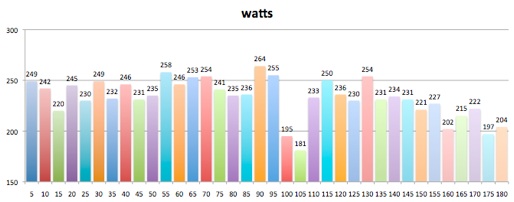
Happy but not ecstatic with this. It’s interesting that you can plan but if it’s not based on a correct assessment on where you’re at what use is it. The reason I say this is I had a plan and I executed it well but it didn’t deliver the result. I couldn’t have been in a better frame of mind going in to the bike. Probably the most positive I’ve been in any Kona race. I decided that based on my IM Wales performance (248 watts for 5h50) I should be able to hold about 250 watts if I managed to evening pace it. I wanted to be conservative and be strong at the end so felt that low 240s to Hawi would work.

Kona11-2

In town I managed to hold my enthusiasm and on the Queen K kept a lid on things. It felt easy and my average was 238. It crept up to the Hawi turn and on the way down. Right on plan and I was all ready to hit the Queen K with a little extra juice. It wasn’t my frame of mind that stopped it I just didn’t have the juice to give. I faded big time. So four weeks ago I average 248 watts for 5H50 and now I fade big time after about four hours. Now it could be the heat, nutrition etc… I could blame them and probably argue a good case but it doesn’t feel right. I ate my nutrition as usual, I was cooling myself, I felt good, I even pee’d in T2 which is very unusual for me and suggests I did hydration pretty well. For me the obvious answer here is I just wasn’t recovered from Ironman Wales. It’s also interesting to note that in the 365 days through to the race I’d raced 7 Ironman races and in two years since starting back after surgery I’ve raced 11 Ironman races and two Epic Camps. I think I may need a break and fully intend taking one.

RUN

Lets be clear – I completely imploded in a matter of minutes after 19 miles of the run. Lets nip in the bud straight away that it may be because I run in Vibrams – anyone that seriously believes merely changing my shoes will knock over 1h20 from my run split has far too great a belief in running shoes and running technology. It may have been the heat as I did feel hot getting on to the run but I did get this under control and my running was improving. I’ve had many comments of people that saw me running as far along the course as the energy lab that were stunned at what happened as I looked so good running. I felt I had got the heat under control and what others saw suggest I did. I was running well. I was fuelling well. I had not the slightest inkling of cramp. My feet had no soreness, I was drinking at each aid station.

So … it’s nice to have excuses and I could rustle up a few and probably provide an incredibly plausible reasoning. It’s not that though it’s plain and simple. It’s a lack of run training. I was not prepared to be able to run 26 miles and at 19 miles just when my mind was saying push for home I had absolutely nothing. I may not have been truly clear about this in my race report. I have never felt this before … I was running well and then without any discussion in my brain, without any particular internal dialogue or thought I was walking.

It was really quite bizarre because it really was less uncomfortable to run. In fact, it was least uncomfortable to run fast but when I did I lasted maybe 500m and then I would just stop again without any conscious thought. Now for all I know this may be the difference, it’s in my mind and the top AGers and Pros just someone override this. It could be the case but since I can’t truly get in their minds it’s not worth exploring. With 7 miles to go I was walking at 15 min/ km so we’re talking about 3 hours. It was hard to comprehend. It was made worse that I would occasionally stop. Until I got to 1 mile to go I thought there was a strong possibility I wouldn’t finish. It was not about cut offs it was about my ability to walk the distance in any time let alone by midnight. It didn’t feel like a bonk. I’d eaten like I have before possibly more. No digestive issues, eating at aid stations made be feel neither better nor worse. Plain and simple my legs were completely fatigued.

Kona11-4

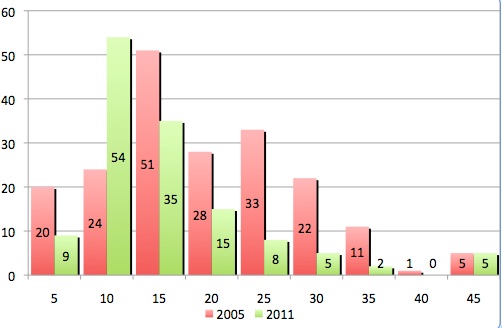
This graph is for the 40 weeks (approx since 1 jan) leading in to this race and 2005 showing how many runs of different lengths I did. The reason I chose 2005 is that that year I did UK IM pretty close to Kona and I still ran well in Kona (3:23) but at the time I felt I faded. ie 3:23 was a bad run. As an indication the two Ironman following it (in 2006) I ran 3:08 and 3:17. In 2005 I ran more than double the KMs ( 3,400km vs 1,650km) with an average run length of 17.4km in 2005 to 12.5km this year. Just look at the distribution – in 2005 I did 72 runs over 20km but this year only 20. If you ignore races it’s 67 vs 15. Look at over 30km (excl racea) and it’s 12 vs 2.

It’s good news that it’s simple since that makes it obvious what is required to fix it !

I thought I’d end with a final graph showing my run power. It nicely shows my run / walk through the first three hours including a longer walk up Palani and a longer walk in the Energy lab before at 200 minutes showing the complete detonation and my few vane attempts to run which luckily helped get me to the finish line at a half decent time of day. I so want to race well here at least once … I guess I’m going to have to try and qualify next year.

Posted in 2011, Kona, Race Review | Tagged , , , | Leave a comment