
Based on a talk given at Giant / Blueseventy Event In London on 2nd Feb 2017
Video of talk can be found here.

Before getting into any specific sessions we should start with the fundamentals – whatever level of swimmer you are, whatever you goals, THE most important aspect of any swim session is… Turning up! No matter how good the session is if you don’t turn up and swim they are no use. This means the coach/self-coached athletes’ priority is to make swimming enjoyable enough that you actually want to show up to the pool. This might mean arranging to swim with a friend, or even better join a squad. If using toys gets you swimming then use them. Put on the core shorts, the pull buoy, paddles, snorkel. No matter what the best swim coaches might be saying about the use of swim aids this season; Swimming with these is better than not swimming.
Typically people swim better and work harder when training in a group. This means it’s probably better to swim in a group and compromise the specific session that might be have been set just for you, and do what the group is doing. Specificity is good, yes – but variety is also and keeping things fresh and interesting could be crucial.
Group or squad swims are even better if there is a coach poolside. Technique improves over the long haul, with regular reminders of the things you’re trying to address in your technique. Technical issues are not typically resolved in an occasional one-to-one session, instead it’s those few second comment’s made a few times each session, several times each week for weeks and months and years.
so – swim regularly, keep the sessions interesting and enjoyable, swim in a coached session. These are great starters for making improvements in you swimming.
I still don’t want to discuss specific sessions, as there are some ground rules that you should apply to every session to get the most out of it.
- Engage the coach. In a pool of 30 swimmers the coach will not be able to give feedback on everyone all the time. Also some coaches feel less able to repeatedly tell adults the same thing (which is normally what is required) in the way that they do when coaching children. So at the start of the session speak to the coach and let him know you’re keen for any feedback he can give you
- Work. All sessions include some work. I don’t believe in “technique only” sessions as a regular feature of a training programme. At certain times of year this may be appropriate and then it is best done with a coach in attendance. I suspect at times it’s even used as an excuse for an easy session. Technique needs to be put under pressure so following some technique work do some harder swimming trying to practise what the technique has taught you.
- Concentrate. When you are cycling and running for a lot of your training you can let you mind wander, put the world to rights or gossip with your pals, and you’ll still get good results. This is not the case with swimming. You need to be engaged and focussed, thinking about every stroke. This is the only way you will improve. I think about every stroke I make in the water. So at the start of each length have something in mind to focus on during that particular length. Have a fall back thing that you will focus on if your coach hasn’t highlighted anything specific. I have two I use – “finger press at start of the catch” and “really shove the water to my feet”. This focus on what you are doing should mean you don’t lose count during a set!
- Pace Clock. Learn to use the pace clock. Triathletes love spending their time pressing the buttons on Garmins and generally not focussing on swimming. If you have use for the data (normally it’s purely for posting on Strava) then wear the watch but just leave it be. Once you’re used to the pace clock it’s far quicker getting your splits from that and it can help you count – e.g. 12 x 50 on 1:05 is just once round the clock. (see the bottom for explanation of splits) Secondly the pace clock can be a great tool to practise sighting. Depending on where the pace clock is you can take a look at it when it’s at the far end of the pool. So off the turn you take a look at it using “crocodile eyes” on your third stroke without breaking your stroke rhythm. This also allows you to get your splits. With practise you’ll be able to get 100 splits on a 400 using only the pace clock.
- Minimise dead time. This is particularly important where you have a fixed time in the pool (e.g. in a squad). Try and turn up on time and swim until you have to get out. If others are in the lane chatting just get on with it. An extra 100m each session in a week of three sessions adds up to 15k of swimming in the year. In 10 years of triathlon thats 150k of swimming. Just imagine what your swimming would be like right now if you’d already banked an extra 150k of swimming.
- Count Strokes. Get into the habit of counting strokes (per length). Count strokes regularly. This is not specifically to endlessly try to reduce it. It’s much more important so you can spot when your stroke mechanics are deteriorating so it can prompt you to focus. You will develop a sense of what your stroke is and then as you tire can notice when it goes up. This is when you need to focus and get back on it maintaining stroke length. This is how you build muscular endurance.
So… now, finally on to some session specifics:
When designing swim session for triathletes, it’s important to remember the nature of the race we’re doing. In our case, the swim is at the start of a much longer event and is normally in open water – where you’re only sense of pace will be by perceived effort level. To this end we’re looking to build ‘sub max’ swim pace and a good sense of pacing. We’re also looking for efficiency so that we can swim the distance without expending too much energy. It’s also the only of our 3 race disciplines where it’s realistic to swim race distance virtually every session. Doing this will help no-end with your race performance.
Here are three types of sets that I incorporate in to the sessions I give:
BUILD SETS
These are sets of repeats where you build the pace in subsequent efforts. It’s typical for even experienced swimmers to go too fast at the start. It’s a great way to get a feel for how easy you have to feel your going when you’re fresh to be swimming at the right pace. Examples of this sort of set are:
12 x 100 build each 3 – this means you do 100 easy / steady, then the 2nd one a bit faster and the 3rd one faster still. Repeat that cycle 4 times to get 12 reps.
Another example is:
4 x 25 build 1-4
4 x 50 build 1-4
4 x 100 build 1-4
This gives a nice progression from build pace over a single length which is typically easier to achieve and then increasing the distance. As your pace judgement improves you should be able to do a series of 400s with each getting a little faster.
RACE PACE SETS ON SHORT REST
These give you a great sense of the pace you plan to swim at. They are done with short rest – only 5-10s. The rest isn’t really for recovery (you shouldn’t need it for your race pace) but more so you can check your pacing. So say your target is 30 minutes for 1.5k (i.e. 2 mins per 100) here are a couple of sessions
15 x 100 on 2:10 holding 2:00 per 100.
A progression from this which puts you under a little more pressure is
15 x 100 done cycling through (2 on 2:10 and 1 on 2:05)
8 x 50 on 1:10 holding 1:00 per 50
4 x 100 on 2:10 holding 2:00 per 100
2 x 200 on 4:10 holding 4:00 per 100
400 aiming for 8 mins
This progression uses the shorter reps to get you dialled in to the pace and then you try and hit a final 400 at the pace.
INTERVALS ALTERNATED WITH PADDLES
I love these sessions as they build strength and muscular endurance which will translate in to efficiency. The idea is to do some fun harder intervals interspersed with paddle work. The paddle work is focussed on maintaining stroke length.
A couple of examples are [using 30 min 1.5k swimmer as an example of repeat times]:
3 x [ 4 x 100 build 1-4 on 2:15, 200 pull with paddles on 5:00]
3 x [4 x 50 FAST on 1:30, 400 pull with paddles on 9:00]
** Explanation of swim sets. 8 x 50 on 1:10 means that each 50 starts 1:10 after the previous one. So if you swim a 50 in 55s you will get 15s rest before starting the next one. If you take 1:05 you’ll only get 5s rest.
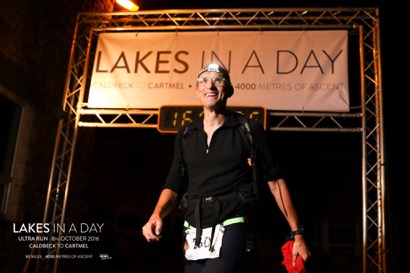 LONG REPORT
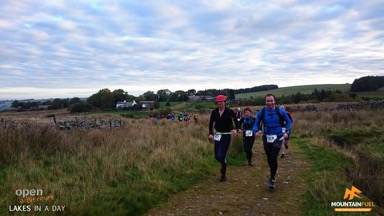 Even though at the start of such long events you know almost everyone starts too fast you get drawn in. It wasn’t like we were going that fast but we were certainly running up a hill we knew that before long there’s no way we’d run up a hill that steep. As we hit the open fell after a couple of KMs everything settled down as the vast majority started to walk knowing the best approach to this day was to walk anything but the shallowest uphills. It’s a friendly event and we each got chatting to various people. This the closest I got to losing Mel as I took my cap off, she looked up couldn’t see me and stopped to look back. Luckily someone had a word with me and I gave Mel a shout.
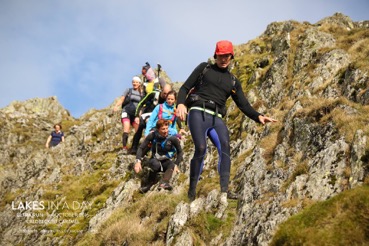 This first section from the north to Blencathra is the trickiest navigation with no real tracks however we had near perfect conditions so you could see all the tops and with people not that dispersed there was no way you could go wrong. It’s a fairly gentle climb over High Pike and then some running on the tops before a long descent across burnt bracken to a river crossing and then on to the long long slog up the back of Blencathra.
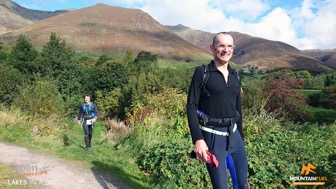 In Threlkeld was the first feed station. We’d agreed we wouldn’t dilly dally in the aid stations instead just stay as long as require to get a hot drink and some food. We stuck to this plan. It meant a pattern established in the day whereby we passed faster people in the feed stations and then they re-passed us later. It was nice to see the same people several times.
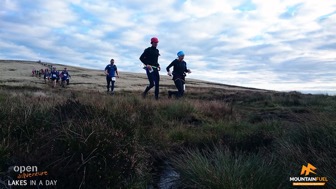 In the Ambleside feed station Mel had a low point though at the time I didn’t realise it. When I’d looked at the route I’d thought to myself how great it was as far as Ambleside and how it didn’t look so interesting afterwards. I’d said to Rachel how it would be more fun to just do the route to Ambleside. This meant I was focussed on just getting out of there to resist temptation. It was also late (just after 5) and I was keen to get as much as possible done in daylight as this final section was going to have most navigation.
 Mel and I had a goal of finishing before last orders. We weren’t far in to the day when we realised it was unlikely. Getting back to our hotel we did manage to get a bottle of local beer and a packet of crisps from the hotel bar. We know how to celebrate.
 SHORT REPORT
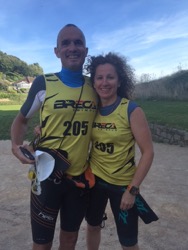
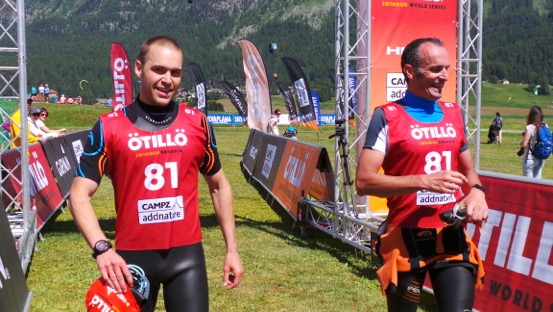
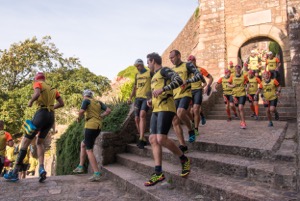 At the race start in the Gorey Castle Ben, the Race Director, warned us that with the current sea conditions the early swims would be tough and the first cut off would be tight. We all gathered for the pre race photo and I promised to remember to hit split on my watch so I could gauge how fast we swam together. We’d practised alot swimming with an elastic between us but never formally measured how much quicker we were.
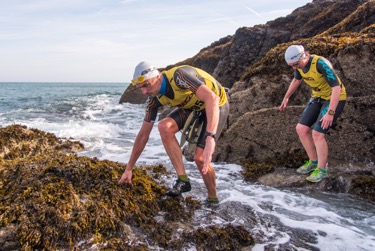 We must have passed 10 pairs on that swim and got out quite pleased with ourselves. Rachel undid the elastic between us but we agreed after that we’d leave it on unless it proved too technical to be attached. The next run was along by the coast on a rough path with lots of short steps and uneven ground. Lots of pairs re-passed us but it wasn’t long before we were back in the water and passing people again. I was pretty sure there were only 2 sets of white hats (sprint competitors) in front of us and one of those pairs were Andy and Mike who’d we met at the briefing the night before. We caught them on this swim and just as I passed Andy Mike veered off so I found myself swimming between the two of them and soon felt the resistance that meant Andy had got caught up on our rope (I apologised over a beer after the race). This swim was very rough indeed and finished going up the slip road on a massive St Catherines breakwater. As we approached the chop got huge as waves bounced back off the breakwater. It felt like we were making no progress but we were still passing people. Getting on to the slip was tricky and I eased up to try and judge a safe moment in the waves.
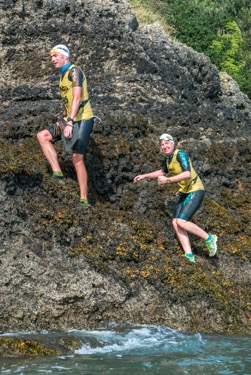 From here the runs were mainly on the coast path. This meant lovely single track running for lots of it and undulating up and down that is typical of many coast paths. This particular section we’d been warned about as it ended with an off track decent to a rocky headland and the first tricky entry. We stayed tied together so I tried to be careful not to go too quickly. Soon we were back in to the beautiful water and a cool off for the swim to the first checkpoint. We were told we were second mixed pair (the first pair was in the full distance race).
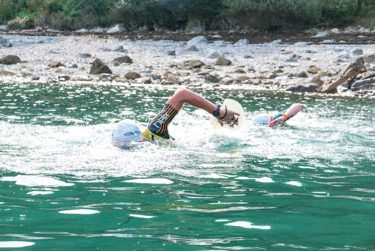 The next swim was going to be the trickiest to navigate. I’d remembered from the course and briefing I thought it would be interesting as you had to swim around a headland and then in. We’d been told there would be no sighting buoys. I liked that about this race. It was an adventure and it would reward navigation skills in open water. A marshal had an aerial map of the course so I took a quick look and eyeballed the headland we’d have to go around. After passing one pair we were completely on our own. Couldn’t see another pair or any kayaks. It was great, cliffs to our left, ocean right. It felt adventurous. Once in the water everything starts to look different. I passed what I thought was the headland but soon realised it was the next one. I cut in looking for the exit. Couldn’t find it. Stopped briefly and Rachel spotted where we were heading. I’d mis-remembered how far it was but now we were on track. As we came to the exit two pairs suddenly appeared to our right. One was Andy and Mike and we found out later that they’d made the mistake of heading to the next headland and went quite a bit off course.
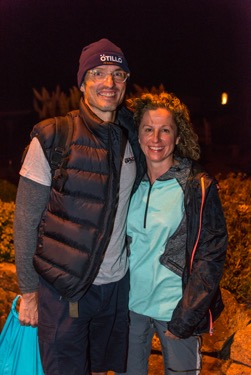 I was chuffed to bits.
 I transferred my entry from Ironman UK to Ironman Weymouth and with hindsight I’m so glad I did. Following Ironman Texas I enjoyed a lovely walking holiday in The Lake District and then had great fun at Engadin Swim Run but it was clear that there’s no way I would have been in a good state to race Ironman UK.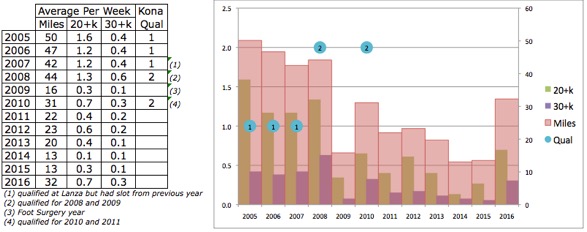
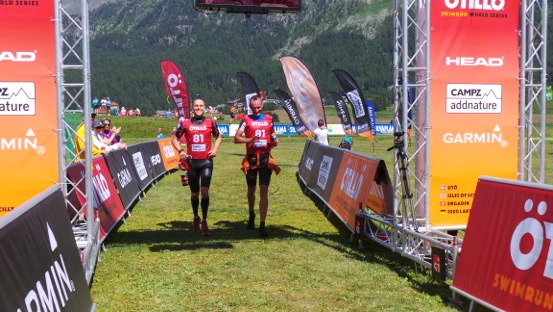
 7:41:04 – 22nd Male team, 29th overall (~47k running, 6k swimming)

 LONG REPORT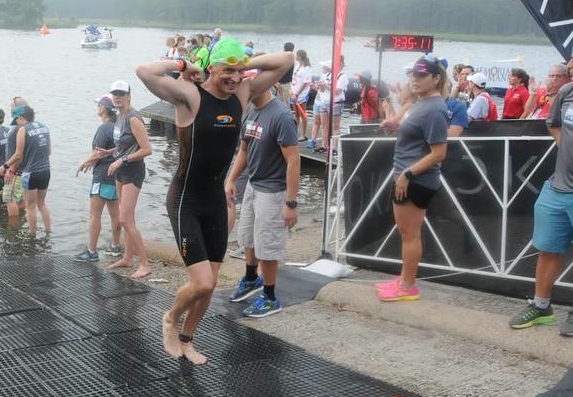
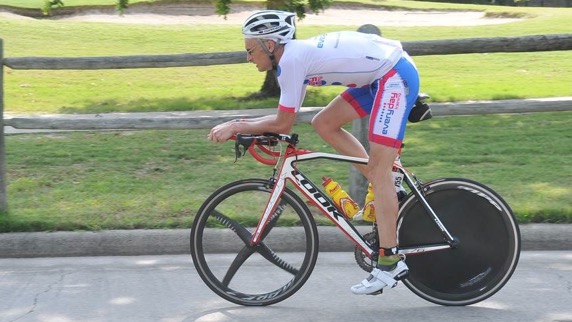
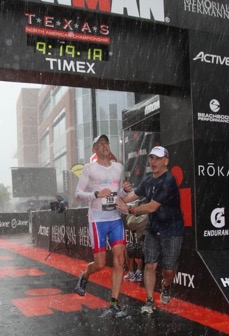
 This process was easy on the first lap with hardly anyone on the course. By the last laps it required walking which by then was helpful as I was struggling. My plan was to run relaxed on the first lap, focus on maintaining pace on second then try and push on in third. First lap at 5:05 km pace ( thats 3:33 marathon pace) – this was bang on. Game on I thought, feeling good and sub 3:40 marathon had to get me to Kona.
 The weather was clearly closing in. Dark clouds were amassing. With about 3km to go the rain started. It was refreshing, it was cooling, it made a difference. Then the rain got heavier, then the thunder started. At times I jumped out of my skin. It was amazing. I’d see lightning out of the corner of my right eye and it’s reflection in a high rise out of my left. The rain
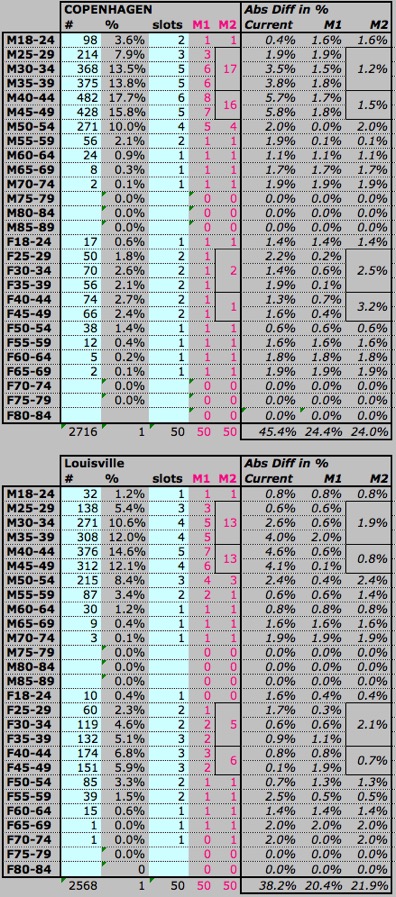 For comparison to the right are the allocations for Copenhagen and Louisville using this method [“M1”] and those that actually were allocated [“Current”]. Having tried to clearly state the rules it’s made even more clear how difficult it is to write a unambiguous algorithm in prose. To test out an algorithm the WTC could produce a page that calculates slots using their algorithm and let people stress test it. I bet it wouldn’t be long before any bugs in it would be ironed out. Bit too transparent that though for the WTC.
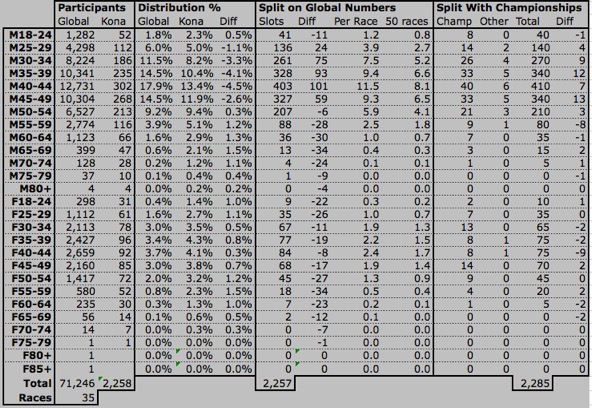 When you look at the slot allocation you see it’s clear that these differences correlate with the large age groups and the small age groups. To be honest, it’s pretty obvious that it’s a direct result of the allocation of a minimum of 1 per age group. The effect of this, in the smaller age groups, is to increase the global odds of you qualifying (as shown by the disproportionate numbers at Kona) but making the qualification at a particular race more random. Thus, in these age groups, if you can race a lot this is in your favour but, if you can’t its advantageous to race in a larger age group where it’s easier to predict what is required. I’d personally take the latter. As the number of races increase, more and more age groups will be placed in this situation.
 Steven Lords Website