Taupo Race Analysis

NZ11-3Race Report here

Currently on the ferry to the South Island on my way home to Christchurch for my final couple of days before returning to the UK. A week or so a go I was home sick and so looking forward to returning to the UK. Over the past couple of days I’ve been getting a little sad about leaving not because I’m no longer desperate to see my family (I am) but because I’m not sure when I’ll next be back. It’s unlikely to be next year but now I’m wondering whether we should just come out for a couple of months after Christmas. Need to decide though as I’m sure Ironman New Zealand will sell out really quick.

Before I go in to the race analysis I want to describe some of what has gone on in Taupo these last few days.

The Hawaii roll down was amazing. Busso had been good and I wondered whether that was an indication of how this one would go. I’d encouraged my friends to go if they were close to roll down. I spoke to Kevin McKinnon just before and he told me there were 16 roll downs ! My housemate Andrew was 10th in his age group. He’d raced awesomely and was on course for a 9:15 (and a slot) when his calf tore !! He hobbled home in 9:29. Another friend, Pete, has missed out on a Kona slot by 6 seconds twice, yes TWICE. This time he was tenth and there were six slots. To put this in perspective, his partner had been the perfect supporter encouraging him to keep pushing and he passed 3 people in his age group in the last couple of KM. He’d considered not coming along. Then the age group below his had 4 rolls downs. They come to his age group. 3 roll downs. We’re all thinking bloody hell he’s going to miss out by one again. Then he realised the guy in 7th normally doesn’t take his slot. Excitement. The call his name once, twice …he’s not there !! Now Pete doubts he’s remembered right that he’s tenth. They call his name, we erupt, he almost hits the roof. Runs down the steps 3 or 4 at a time and jumps on stage, hugs Mike Reilly. The whole audience goes bananas. 2:30pm we’re in the pub celebrating with beers … this continues through the banquet and back down to the Irish bar. Most I’ve drunk day after the race and I hadn’t even done well ! Can’t wait to be in Kona with Pete… the after party will be fun if we manage to wangle tickets again.

Next up was the banquet. Of the 22 Christchurch based athletes 21 finished. They got all of them on stage to applaud them. They then showed a very emotional video of the devastation. I had to hug Susan, Pete’s partner, as she was distraught. They then announced they’d set up a charitable trust to which WTC had given $40,000, Taupo Council $13,000 and the other sponsors $13,000. This would be used to help these athletes in whatever way necessary. They then sent Cam Brown, Terrenzo, Sam Warriner and Jo Lawn round with buckets to raise more money. Good stuff and I know the Christchurch athletes really appreciated it. It was a fine thing to see and makes me think perhaps we can get through the coming difficulties with the global recession and oil running out.

So how was my race ? It was for sure below par and disappointing. If I’m absolutely honest my heart and mind weren’t on it. It shows that a degree of mental focus is absolutely necessary. I am genuinely impressed with Andrew and Ali together with Pete all who have homes in Christchurch but still stayed focussed enough to produce excellent performances. My hat goes off to them. Had Kona been on the line would I have focussed ? I like to think so. Having said all this I have to stay that the evidence in training since Wanaka wasn’t really there for a great performance. I’d not been swimming anything like I had been ahead of Wanaka. I’d not had a single bike session where I saw decent power numbers. Running was relatively positive in that I’d had consistent running and had far more miles in my legs compared to Wanaka but I’d only had glimpses of any sort of speed.  I’d like to think I should have been sub 9:30 on that course but on the day I was no where near.

So … discipline by discipline:

SWIM

I absolutely stuck to my guns here and swam really conservative. I was bilateral breathing for huge chunks of it. Even breathing every 4 for some of it. In the past I had to breath every two. Throughout I felt in control and could surge as and when required but I was totally not out of breath. I braced myself for 55+ mins so 53 was really pleasing. I was interested to see that Andrew came out in the front pack of Age Groupers in just under 50. Now, with hindsight do I think it was a good idea ? Pretty sure I don’t. Think I’ve learnt something about my mentality now. I like feeling I’m in the race (more on this in the bike section). If I’d gone for it I’m pretty sure I could swim with Andrew and I would have been out front. Next race I have to decide whether to go back to my old ways or to give this another go since this was probably not a good indication of how it worked as I think my poor performance following this may have been for other reasons

T1

Kept my run (it’s 500m run to T1) under control not wanting to raise my HR. I’d gone easy on the swim and got a good split so I was keen to keep it conservative on the bike.

BIKE

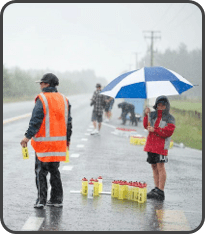
I headed out comfortably. It was absolutely peeing down (it did the whole day). Despite saying to Pete on the start line that I was not putting on extra clothes because if I was cold I would ride harder I didn’t pick up the pace to warm up. In that first lap on the down hills I was cold. Also the rain meant I couldn’t monitor my data – I had to wipe the screen and stare at it to see it. Groups went by and I just didn’t have the motivation to go with them. I had an excuse that I was being conservative, I was being sensible. With hindsight allowing myself this “out” didn’t help. It stopped me at least going with the packs and seeing. As more  people went my my mood got lower. This was ridiculous, these are guys that aren’t better cyclists than me. Now I’m not in the race. I felt like I was giving up. It was a slippery slope. At the time it didn’t dawn on me but now I’m pretty sure this sluggishness of thinking was the cold.

I’d been systematically chugging my gels and taking a little water but still I was desperate to pee. I couldn’t get myself to go as I approached town. As I rode in I started thinking about whether I’d do a training ride in this weather. I came this “| |” close to chucking in the towel. I’ve never felt that before but just found I couldn’t, I thought about the feeling when you finish and that got me going through town. As we left down my mind was so absent that I nearly didn’t get my arm band. Again, this is almost certainly a sign I was cold.

At 100k I stopped to pee and I was stunned at how long I pee’d for. Funnily enough, in the tent after the race I spoke to loads of people with the same experience. There was little need for hydration in these conditions (I weighed more at the finish that the start).

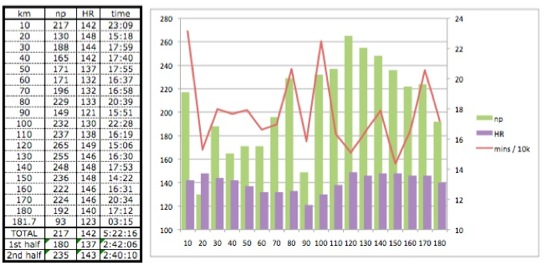
I really don’t know what clicked following that pee but my mindset changed COMPLETELY. I suddenly was thinking I’m going to show these guys. There’s no way they should be in front of me. I am better than them. I thought of Jo following online and convinced myself she’d be really impressed when I negative split this bike. My mind ran with the idea I’d still pull a good split out of the bike and suddenly my slow first lap would look like the height of good sense. I was suddenly fired up, how I would normally be out of the swim. Adrenalin was flowing and I almost immediately was HAMMERING. I warmed up and I felt great. Here’s the data (think my HRM was a little dodgy for second split):
NZ11-2

To put this in perspective asking others that raced and looking at some of the faster guys splits the conditions worsened and most of the fast guys were 10-15 minutes slower second lap. Even with a couple of minute stop I was 2 minutes quicker. This was not just a matter of trying harder. If you look at my Watts per heart beat it increased by 25%. I was flying and feeling great. Of course, you can imagine what it was like. Most are slowly by 10-15 minutes and I’ve sped up. Yes I was catching pace lines, sitting up at the back fueling up and then head down and hammer past often breaking them up in the process. My god it was fun. I didn’t feel I could tire. I went from the end of the first lap thinking there is no way I can complete a marathon to looking forward to it. I started doing mental arithmetic about times etc… it’s a sign the conditions were worse because given the way I was riding I thought I’d turn the bike around for a 5:10 but in fact despite the better power figures I was only a couple of minutes quicker. I caught and passed 4 big pace lines.

The key question is why did this happen? I am convinced now that I was very cold in that first lap. This muddied my thinking and attitude. Thinking back in the first lap I was thinking I was cold, I was close to shivering on descents but I didn’t think to speed up. In the second lap there was no thought of cold, my mind was on the race, I wanted to get back in to it. Given these circumstances again I would change my race plan on the fly and hit the bike hard. In these conditions the key goal had to be to keep warm.

T2

I’d decided against racing in my Vivobarefoot Evos purely because I’d not had enough time running in them. I’d got some from them with a view to trying them out and racing in them if I was totally happy with them. With all the disruption I just hadn’t managed to get the runs in I wanted. (I have a review of them to come but again with all thats happened I didn’t feel like writing it just yet). So into the muddy T2. Funny thing is as I approached T2 there’s a marshall shouting “slippery corner”. Given what the whole course had been like I thought this must be really slippery since they’d not had any mention that other corners were slippery. Jeez, this must be bad if they’re warning me. They’d not even warned on the corners which were like rivers. So I slowed down and even mentally prepared for coming off ! I didn’t. It freaked me out enough that I didn’t do a running dismount.

T2 went well. I managed to get out of my bag what I needed as I ran in to the tent. Got my vibrams on pretty quick and had a pretty respectable time.

RUN

I was ready for this and keen to see my running form. I didn’t feel great early few KM but still saw 5 min /km. Happy enough. I soon settled into a comfortable pace and was starting to feel great on the run. There was something rubbing my toe, well not rubbing almost cutting in. I stopped to clear it but couldn’t. At the end of the race I did have a cut on the toe. I think when conditions are like this I need a towel in T2 bag as with vibrams I think it’s pretty important to have no crap or dirt on your feet.

The whole run was comfortable. I was running strong, felt strong but just not running fast. I could have kept running like that. It was fun as I could smile, thank everyone and really enjoy the running. There was the feeling of natural efficient running. Problem was it just wasn’t fast ;o(. Helen reckons I’ve developed a “hunters trot” and assures me she can help me change this to being fast. I do hope so because if I can feel that strong and controlled running but whilst going fast it will be awesome.

Pleased with my lack of substantial fade on the run. Also chuffed to bits with how my legs felt the next day. I think the minimalist forefoot running really reduces the inability to walk the day after the race. For me this speaks volumes that this is the right way to run. I think that pushing so hard second lap of the bike was probably detrimental to my run. If I’d gone even over the two laps of the bike for the same split I feel I’d have been in a better position to run faster.

I thoroughly enjoyed the day. Other than Lap 1 of the bike I was even aware of how much fun it was at the time. It was almost hysterical the conditions. We must be bonkers. More bonkers were the thousands of spectators out there. Bonkers but happily bonkers and all the athletes appreciated they were mad enough to stick it out. On Rainbow drive one dude who looked soaked to the skin but smiling said “ I don’t know why I’ve never spectated before…. this is great”. If made me smile.

So it was enjoyable but ultimately I feel flat about my performance. It’s (re) opened my eyes to the work required on my running. I’m still underestimating what is required to get my running back from the injury I had. This re-affirms it won’t be easy and I must knuckle down. For the moment though I am taking a break. This has been a long season and I think since Busselton I’ve really been just a say surviving rather than flourishing. I need to rest up so I can put in the solid work required to PB at Austria. At the moment getting back on the podium at M-Dot races seems a lot of work away let alone getting on the podium at Kona.
Posted in Race Review | Tagged , , | Leave a comment

Ironman New Zealand, Taupo 2011

Time: 10:14:52
Swim: 53:03
T1: 5:07
Bike: 5:22:36
T2: 2:12
Run: 3:51:52

Race Analysis here

The night before the race my mind wasn’t really focussing on it. At the awards the night before and on the TV that night there was lots of stuff about Christchurch. It was heart warming. The strength of the people, the positive outlook and how people came together to help each other. I was close to tears as I thought about it all.

I had to get to transition early as whilst racking I’d noticed a nick in my tyre and wanted to change it. I walked the mile town Spa Road in the rain with my thumb out and not a single athlete stopped to give me a lift. I couldn’t believe it. The rain was a sign of things to come and it only got harder.

The tyre change, of course, was far quicker than I expected. Jo had given me good advice in an email the night before about finding good light, taking it slow and doing it right. I sheltered from the rain in the marshals tent – they didn’t chuck me out which I think would have happened in most races.

By the swim start it was absolutely chucking it down. It was nice to get in the water and I loved seeing the rain bouncing off the water with every breath. It always feel pretty dark at the start of this race but with this weather you couldn’t see the first buoy. The gun went and I set off comfortably only surging a little to keep out of trouble. I focussed on my breathing using that to judge my pace not wanting to get short of breath at all. I had a completely cruisey swim. It was a total pleasure. If I swam feeling like that in the pool I think I’d have rated it a recovery swim. Readying myself to see 55 or 56 minutes on the clock when I exited I was over the moon to see 52:30 (actually 53:05 as the start wasn’t the full 15 minutes after the pros). Anyway, I was very pleased indeed with that. As I run towards T1 I was touched when I heard the announcer give my name and say something about me having been living in Christchurch … I didn’t have the special Christchurch number so I’ve no idea how it worked that out.

Now for the next stage of my plan – the run to transition. Still peeing down I was aiming not to get drawn in to the sprint. I didn’t want to raise my heart rate too much. I passed through transition in 5 minutes and had two thirds of my mars bar down me by the time I was mounting my bike. Pleased with that given the length of transition (at least 500m from swim exit to T1).

On the bike my aim was to be conservative. With all the rain it was impossible to monitor my data as I rode. Instead I had to wipe it and look carefully to see anything. This meant I had to go on feel. I just didn’t have any juice and had tonnes of people whizzing by. Rather than forming up with the pace lines I just kept getting dropped off the back. It was really quite demoralising. The rain at times was torrential. Clearly my mind wasn’t focussed as I thought a lot about Christchurch as I rode. By the end of the first lap I remember wondering whether if this was a training ride I would just knock it on the head. This is the closest I’ve ever come to dropping out of a race but I persuaded myself to start the second lap. At about 100k I finally stopped to pee – I’d been bursting for about 20k but just couldn’t manage to leak on the bike. I was surprised how long it took … there was tonnes ! Even though I’d been drinking less due to the conditions I was over hydrated. Back on the bike was a transformation I felt like the old me. I rode the second half 2 minutes quicker than the first despite stopping to pee and with the wind strengthening. I bridged and passed four pacelines ahead of me. I’d bridge to each group, sit at the back and take on some food and drink and then hammer past the line. As I moved through the field I was enjoying that I was effectively breaking up these lines as some would try and come with me. It was fun. It also confirmed my idea that they should have “undercover draft busters”. Later in the ride I’d passed these two guys riding together (legally from what I could see). They stuck with me as I bridged to the next line (legal again). One of the two behind went by me as we formed up with the line. I kept looking over my shoulder and this guy was right on my wheel. My approach to this is to just sit up and let them go by. He did and I was back off the line, he then rode up to the guy in front and rode right on his wheel. I watched about a minute and then got incensed. The idiot was a multiple IM NZ finisher so he had a special number with his full name (Craig Thorne M45-49). I shouted at him “Craig thats cheating you’ve got to pass” – he didn’t budge. I shouted again and again. Naming him. I felt that perhaps shame would sort him out but it didn’t he just sat there. It was the hill that did him. As I passed I looked at him and he wouldn’t look me in the eye. Well Craig Thorne – you are a draft cheat. As I passed the american guy who’s wheel he’d been on I apologised to him and told him I wasn’t shouting at him. He was so cool, he knew what had happened and said to me “Steven don’t let that guys cheating ruin your day” – good attitude. What really got me was that then a guy at the back of the pack in front, who I’d observed riding legally got pinged for drafting but our blatant cheat hadn’t.

Looking at the faster riders splits most dropped off 10 – 15 minutes in the second lap. I felt like my old self and was positive about the run. With hindsight I do wonder whether I got cold in the first half and once i tried pushing hard I warmed up. It was a total pleasure blasting past all these guys that had passed me earlier.

I’m getting quick at getting my Vibrams on now. Just over 2 minutes for T2. After 5ks of the run I started to feel really solid running and comfortable but I just didn’t have pace. I was in control but just couldn’t push. I feel perhaps it was that I wasn’t mentally switched on enough and just accepted that I was comfortable. I felt I could pick up the pace in the second half but that quickly moved out to the last 10k and then last 5k. I picked up the pace a little at 5k to go but it wasn’t anything dramatic and it lasted about 2k leaving the final 3k pretty hard work. Throughout the run the weather was terrible with monster downpours continuing. Still there were tonnes of supporters. I was amazed how many people knew me in the crowd. There were loads from Christchurch cheering me on and then there were others I just didn’t recognise but clearly knew me as they’d shout “go Steven Lord” or go “Lord Lordy” … only “Steven” was on my number. The support was so great and I just kept smiling and thanking people. I so enjoyed it. Many  of my thoughts during the run were back 2 years earlier. This kept me motivated and positive. I thought about how it takes a lot longer to get back from something like that than you realise. It’s one thing to get to the point of running continuously and strongly but to get the pace I used to have is going to take some serious work.

I lapped up the final few KMs taking it all in and thoroughly enjoyed coming down the finishing shoot. One of my poorer Ironman performances but one of my better Ironman experiences.

Posted in Race Report | Tagged , , | Leave a comment

Ironman New Zealand 2011 Race Preview

TaupoTomorrow.jpgAnother Ironman tomorrow and I feel totally calm. I can’t say I see the importance of it right now. I’m sure a big doze of perspective is a good thing. Jo hasn’t managed to make it up to support so I’m spending a lot of time on my own just chilling out and spending time reading and thinking. My final hours ahead of racking were a little stressful as my rear tyre exploded in my room about 10 minutes after I’d pumped it to pressure. Sure it was my own fault, I had problems putting on my race tyre yesterday and I think I must have not got it on right. Got it fixed though. Then riding in to transition I was in the final block before I’d dismount and my front tyre goes flat. Head in to Avanti to get a tube … $12 !!!! What a rip off but what choice did I have. Then I had to suffer the miserable woman (manager possibly) muttering about me changing it in there. Ghee whizz, it was raining outside, they weren’t even busy. If it was me I would have offered up one of the mechanics that were just standing around to fix it for me.
Got it fixed then when I racked I checked the tyre and there’s a big nick in it. It was right near the end of racking so I didn’t feel I had time to find a new tyre (and get ripped off again ?). Now I’m in a dilemma. On the one hand I’d probably just ride that tyre if it was on my training bike but with rain scheduled there’ll be lots of crap on the road. I thought about sticking glue in the nick (I’ve heard people do this to make tyres last longer) thinking that would at least stop grit getting in and working through. I commented this Facebook and Matt Illingworth was pretty adamant I should change the tyre. When it comes to bikes his opinion carries a lot of weight. So now I’m thinking I should change it and put one of my training tyres on there but I’m not convinced they’re in any better condition !

My plan for tomorrow is to try and really hold back in the swim and bike to see just what allows me to do on the run. I’m trying to prepare mentally for this as I will have to be focussed to not get drawn in on the swim. During the bike my plan is to go steady early on and try to join pace lines as they catch up. I will need to make judgements at the time on whether it’s worth extra effort to stay with those pace lines. On the run, the aim is something similar to Wanaka – keep it controlled in the first half then work on the second to get an even split run. The hope is to be quicker.

Ball park slits: SWIM: 54 – T1: 5 – BIKE: 5:10 – T2: 2 – RUN: 3:25

Which gives: 9:36

Posted in Race Preview | Tagged , , | Leave a comment

Barefoot / Minimalist Running

Barefoot is such a buzzword at the moment often used for running in bare feet and running in minimalist footwear. Minimalist here means footwear that offers no support. I have been running exclusively in minimalist footwear for 9 months prior to that spending years only running in racing flats

This is another area where it appears we changed what we did in the 70s/80s when we started getting ‘advice’. Prior to that running shoes were minimalist, running on your forefoot was natural and we didn’t need experts to tell us what to do.

What is natural? This can be difficult to decide since we’ve been in shoes since we could walk. However, watching young children running barefoot you can see. I see my nephews running around and here in Christchurch during track sessions we have local school kids running round in bare feet. Fast cadence and forefoot strike. In fact, I think most intuitively know that running barefoot they wouldn’t heel strike. Below are some common features of modern footwear and how they could be questioned.

Heel Higher than Toe. Most would agree that high heels are not a great idea, putting the foot in an unnatural position and shortening the Achilles tendon yet most (all?) running shoes have a heel.  This tips your body forward requiring an arching of the back for balance. Is this sensible? It also encourages heel striking. This feels counter intuitive since your toes are lower than your heel when standing. However, it’s quite the opposite: think of your foot in the shoe parallel to the ground, the heel of the shoe would be closer to the ground than the toe. Forefoot strike would require an increased tilt of the foot in such shoes. Even racing “flats” tend to have at least 3mm differential and some shoes have 20mm! Heels also tend to extend beyond the foot, this is referred to as the “Crash Pad”, that alone should make you question it!

Arch Support. Most school kids learn about the great engineering feet of an arched bridge. Its strength is because nothing is under the arch meaning the loads are transferred to either end. Feet don’t have support under the arch transferring loads to ball and heel. Does it make sense to put support under it? Surely that would weaken the muscles in the arch (flat feet anyone?) it would also mean forces are applied to the arch that otherwise wouldn’t be.

Cushioning. This seems to make sense to reduce shock. However, running across the spongy surface of a children’s playground, or on an American Football field (you do in Ironman Wisconsin), you find running feels horrible, slow and unresponsive. It doesn’t make for natural or fast running yet it’s accepted as part of a running shoe. Does it reduce load? There has been research on this showing it doesn’t but even without said research does it make sense. The way your body absorbs the shock of landing is a subconscious thing with joints bending more or less based on the fall. There are reactions to the force being felt. The shoe reduces the feedback being given to your body to decide it’s reactions.

Feet are very sensitive, I’m sure due to the number of nerves in them. Why would this be? Because we’ve evolved to need a lot of feedback from our feet? Does it make sense that in the last 30 years we’ve decided to tamper with this feedback mechanism.

Pronation Control. This has always baffled me. I can’t get my head round how the support can make a difference. Seeing someone with a pair of running shoes that are all worn on one side so the soles are at an angle makes me think the only reason they can run like that is that the padding of the shoe is allowing it. In minimalist footwear the only way they can run like that is by running on the outside of their feet.  To fix this they’re likely to be offered the very shoes that allow it to happen in the first place.

I’ve not had the courage to go completely barefoot. Minimalist shoes allow me to do something you probably wouldn’t in bare feet and that’s have you foot more forward slightly on landing. I am sure I do this and it causes some soreness. Running barefoot would probably solve this. Minimalist footwear has however had me running niggle free for a good long while now.

Posted in Barefoot Running, Triathlete Europe | Tagged , | Leave a comment

Christhurch Earthquake

ChristhchuchEarthquake.jpgRead Jo’s account here

I was in the cinema when it hit. Apparently it only lasted about 20s but every so often since I get an incredibly vivid recollection of how I felt and what I thought at the time and it seems that I had minutes worth of thoughts. Initially it just felt like another big aftershock but it built and when it felt like the whole cinema was a bucking bronco it flashed across my mind that the whole building was coming down. This cinema is in a modern shopping mall and I could only imagine what quantities of concrete were spanning the cinema ceiling. No sooner had this thought crossed my mind than it stopped.

There was a moment of silence and complete calm then someone started screaming. Luckily no one else did as I think that would have just set everyone off. One fella very calmly told everyone “stay calm, don’t panic. Just be aware as we leave that things may be lose so be careful”. I was glad he said this. It’s important to appreciate that everything you previously thought of as safe may not be under these sorts of circumstances.

Inside the theatre there was very little sign of damage as there was nothing to knock over other than the dustbin but as we emerged the level of damage was slowly revealed. In the main bit of the cinema all the signs were over, then into the shopping mall and it just looked like a massive bomb had gone off then getting outside and I could see a building down and there was a great deal of panic. Lots of school kids around and there was such a contrast. Some schoolgirls were freaking out running around clearly with no idea what to do. Luckily calmer friends were helping. You could see some younger lads were almost high on adrenalin. Several people had been badly cut but in all cases someone was looking after them. People were in cars U-turning and driving a little too fast for the circumstance.

I walked home as that was the only way I was going to meet Jo and the rest of our housemates. In the midst of it you don’t really know just how bad it is. I didn’t dwell on where all my friends were as there was nothing I could do right then. As I walked home there was water coming up everywhere. I’d heard about the liquifaction from the last quake but hadn’t appreciated that this is something that happens after the shake. The normal 15 or so minute walk home took the best part of 2 hours as more and more water and silt came up. Luckily someone warned me about crossing any water or silt – massive sink holes can appear so you need to be very careful. There were lots of cases of cars getting caught in these sink holes and afterwards saw pictures of cars that had gone in nose first and were halfway up the car.

Again, things that were previously safe suddenly have implications. The aftershocks kept rolling in. When I’d seen reports of aftershock previously on the news I just hadn’t appreciated just what it was like. These are big shakes and if it hadn’t been for the bigger one before they would be major news in themselves. They are almost scarier because you know everything has been destabilised already. The rest of that day there were shakes almost  continuously with big ones perhaps every hour.

I attempted to keep my feet as clean as possible. The water was probably mixed with sewerage. I knew there’d be no water to clean my feet and that in these sorts of circumstances keeping clean could be critical. I tried various routes to get home before I finally got within sight of our house and just had to cross the road. Decided it was safer to stay on the silt rather than go through the water and got across reasonably easily with just one leg going up to my knee in silt.

Back at home Jo was sat in the house. She’d been in our bedroom at the time and had to unscrew a window to get out as our door jammed. She’d tidied up the mess so it didn’t seem so bad. About 90 minutes later Andrew and Ali came back. Andrew had been right in town opposite one of the buildings that had come down. He was in a modern building with earthquake isolation – this meant it really shook. Finally our last housemate got home. He’d been in the QEII centre and was telling us how this guy we know was about to dive in the 50m pool when it happened. He managed to record the pool on his phone showing the one foot waves going across it.

In the days running up to this I’d been doing a lot of reading and research around the current economic crises in the world and about oil and how much is left. I’d planned an entry entitled “Scary” to give an outline of some of what I’d read. This event really hit home a lot of what I’d been reading. It illustrates when something like this hits how the value of things can change overnight. Admittedly in this case it was only temporary but in those early hours / days of this disaster suddenly your expensive car was pretty valueless without petrol. The person with a mountain bike was pretty rich and the people with an artesian well in their backyard had genuine wealth. Seeing how people panicked about getting petrol – everywhere sold out and in the grand scheme of things the area devastated by the quake was relatively small – if you headed west from our home for a few miles it hardly looked like anything had happened. It illustrated just how reliant we are on oil and makes the prospect of a sudden loss of that incredibly scarce resource pretty scary.

This is a topic for a future post. As is my review of the new Evo running shoes I’ve got. All these sort of things are just put in to perspective by something like this. We were lucky, not just because we got out unscathed but also that the people we live with have parents nearby with large homes that were unaffected.

The kindness of people just comes out in these circumstances. As I walked home everyone I met asked if I was OK and I asked the same of them. I walked with a teenage lad who was mature beyond his years, he was asking at every house if they were OK and could he help at all. Knowing your neighbours and being friendly with them becomes so important as these are the first people that are on hand to help and offer support.

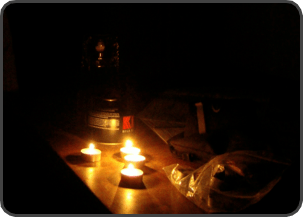
We stayed the night in our house. The five of us talked in to the darkness and cooked by candlelight on a gas stove. It was so nice and we felt perhaps not having a TV and having limited light is not such a bad thing. It brings people together. The next day we decamped to Ali’s parents farm. We had a few days away from the aftershocks. The local swim squad were so kind and gave us a lane to train in and set us a session. Again it was nice the five of us mucking in to make the most of it. Ali’s parents didn’t bat an eyelid and we felt like it was our own home. It was strange to suddenly feel so removed from it all – now we had TV we could see the extent of it but we were now away from the city and could get out and ride  and enjoy a simple existence in the countryside.

After a few days we moved back and are now with Andrew’s parents in Christchurch. Again they’ve made us so welcome. Back feeling the aftershocks but in the west of the city where there’s far less damage. We went back to the house to clear it up and put it in a state that it could be left. It may be months before it’s habitable round there.

Luckily I am still able to get up to Taupo. It seems pretty irrelevant now to be racing but getting away from Christchurch for a bit will be very nice and those friends that are racing are all keen to get up there. Andrew had ridden his bike in to work on the tuesday morning so his race bike is stuck in the cordon and he can’t get it. The Cervelo distributor here is organising a bike for him to race. How good it that !

Tomorrow I have a road trip up to Taupo. Once there I may feel more inclined to think about the race and post some pre  race thoughts up here. Till then…

Posted in Earthquake, Uncategorized | Tagged , | Leave a comment

Walking A Tightrope

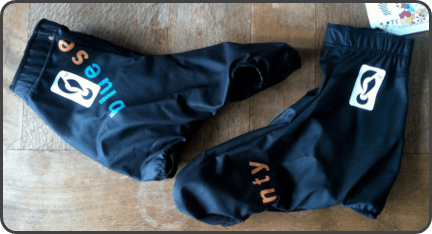
WalkingATighrope1The photo is completely irrelevant to this post. These are some bike overshoes I’ve just received from Oomph! who are recycling old speedsuits (which are no longer legal to race in) by using the material to make overshoes which they’ll sell for charity. They are really funky and I can’t wait to experience a winter again (NOT) so I can try them out.
So to the point of the post. Since Wanaka I’ve felt I’ve been walking a tightrope between recovering and getting ready for Taupo. At times I’ve been describing Ironman New Zealand as a race too far. I had realised that my race season was starting at Kona and had taken a break after the European Champs. Jo, however, had planned a break after UK but qualifying for Kona meant she didn’t so her season effectively started in May and has been non stop. It means it’s pretty marginal whether she’ll race Taupo.

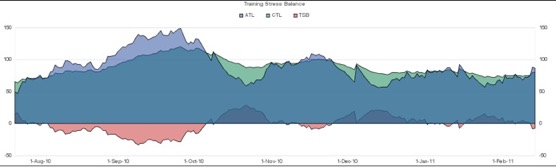
This means I raced Kona, then had 8 weeks, raced Busselton, then had 6 weeks, raced Wanaka and then had 7 weeks to Taupo. It’s been a bit of a balancing act. My poor Kona performance I think helped me a lot for Busselton. I recovered quickly and with my change of approach I not only got rested but I also hit some hard sessions. Every long ride included 6 x (5 mins > 300 watts, 5 min cruise) and the second half included ever increasing spells at IM Wattage. I did another shorter session with a variety of intervals. I ran at pace and did track sessions. I limited squad swimming substituting some shorter punchy sessions on my own. It worked very well and as I progressed towards Busselton I felt that with another few months of this I’d be in awesome shape for Taupo. At the moment I’m not feeling quite as optimistic. Here’s my Training Stress Balance graph for the period:

WalkingATighrope

You can see I had a pretty solid build through to Kona. My old style approach. Shows my CTL was way higher than it’s been since but looking at my TSB you can see compared to subsequent races I was not really that fresh at all. I didn’t feel fresh thats for sure.

For Ironman Western Australia I was ready to race and I raced hard. This showed in the level of recovery required. Post Kona I was training pretty full on when we arrived in Christchurch about 10 days after the race. Post Busselton I felt much more tired. I think this combined with Christmas, where probably went a couple of weeks where Jo and I had a couple of beers each night, made recovery even slower. I don’t think I ever got drunk but I do feel this plus more “off plan” foods (eg christmas pud, chocolate) further slowing recovery. I went through a real on / off period with training. I’d get a good days training and then be wasted the next day. I wasn’t able to string two days together. I certainly didn’t manage any sort of intervals. Running kept me sane, I was focussing on technique changing to fore foot strike. In this period I ran only 90 miles in 6 weeks. Swimming was going awesomely, recording some of the fastest training times I’ve seen since taking up Triathlon. 6 days out from the race I felt absolutely cooked, funnily enough this was on a ride to Mount Cook. Then three days later I felt great. I raced really well, and ran the strongest for a long long time.

This time I was really focussed on keeping my diet good post race and I achieved it. I hoped that having a weeks proper holiday I’d be ready to go. Again though I’ve found myself having good and then bad days. I’ve not done any intervals in my cycling. It seems every time I do The Gorges ride at the moment I’ll implode on the way back down the Old West Coast Road. Prior to Busso I was full throttle down there at the end of an extended Gorges route. Now I’d do the regular route and would find myself stopped by the side of the road, sitting under a tree, in the shade enjoying a gel. Unheard of for me. I started to think to myself, here we go the lack of big bike miles… I now just can’t ride long. Swim form deserted me. Swimming is hard work when your swimming poorly with the memory of swimming really well fresh in your memory. One swim session, Axel told me, in typical german style “It takes four weeks to recover from Ironman. If it takes less you didn’t race it right”. The saving grace has been running. This has continue to feel great, forefoot strike is starting to feel natural but there’s still the buzz of feeling much more connected.

It’s a tough one which I’m sure many of you will experience if you have big races close together. I kept reminding myself that the biggest gains in fitness will come, right now, from getting recovered. So I’d sleep in, I’d take an easy day. There’s always that doubt though and being self coached I didn’t have a coach saying I was doing the right thing. My coach (me) would start a whispering campaign of “you’re a wimp”, “just get on with it”. I’d do that then be wiped out next day. It’s become a joke in our Triathlete household here that I’ll say I’m going swimming and then just roll over the next morning when my alarm goes off. My saving grace was qualifying at Busselton so ultimately Taupo is not that important. I decided that I would rest if needed and keep testing myself. I felt a key sign of being recovered would be being strong in the second half of a long ride.

This all changed this weekend. Saturday was 4 weeks post race and Axel appears to have been bang on. Sunday I head out for a ride. I was a little optimistic as the previous day climbing Mount Pleasant from Lyttleton side I recorded a CP30 only 20 watts off my best. Thing is I wasn’t even trying to go hard. I head out with Scott and Jo just easy for the first 40km as they were going to do a TT. I then continued along the TT course. Initially riding hard to clear the course before they came through. I continued to push to Oxford where I had coffee and bacon sarnie. Then I decided to really hammer the  next 50 or so KM to see how I went. Stopped for more food then realised I was pretty tight for time to get back in time for the Challange Wanaka coverage on TV. It was great, pushing along this late in a ride and feeling great. I got home, sat down and the coverage started ( I think this got a smile from Jo as true to form I was on time!). Not only were we both on TV ! but I saw my data – 216km, 7hrs, average watts 225. I could ride again.

Then this morning I got up for swimming no problem, didn’t swim great though i did swim better. This afternoon I ran a tempo 10km and towards the end was going at about 4:10 / KM and felt like a runner for the first time since my surgery.

I’m now looking forward to Taupo.

Posted in Training Review | Tagged , | Leave a comment

Getting Aero

Recently I’ve had discussions with athletes about getting aero. Specifically Road vs TT bike, aero tubing vs none and aero bar set up. Much of this will be of use to anyone setting up their bike for racing Triathlon for the first time and it may provide some food for though for those more experienced triathletes. This post will start with the basics of Road vs TT bike. A follow up post will look at aero bar set up.

Road vs TT Bike

gettingaero

In general aero tubing has been the domain of Time Trial (TT) bikes though recently manufacturers have been offering aero road bikes which have aero tubing and internal cable routing (gear and brake cables run inside the frame (and out of the wind).

When it comes to TT bikes, in my view, the aero tubing is pretty irrelevant. When comparing a bike in a wind tunnel without a rider it may make a difference but once the rider is on board the biggest factor for wind resistance is the ridings position on the bike. This is where TT bikes come in to their own and something that generally a road bike can’t offer without compromises on how the bike rides.

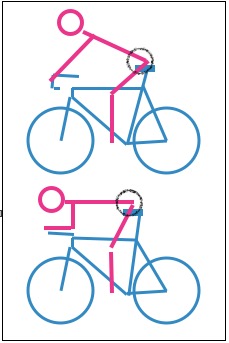
The top picture is my attempt to show a rider in a typical position on a road bike. I’ve circled the key point here which is the angle of their torso to their leg. I’ve noted it when the pedal is approximately at 9 O’clock as it changes through the pedal stroke.

The bottom picture shows the same rider on the a TT bike. NB the angle is the same. By having a steeper seat angle (and pushing the saddle forward if necessary) you can effectively rotate your body bringing your shoulders down, your backside comes forward relative to the bottom bracket keeping the angle at the hip the same. This means you increase how aero your are without major changes to the angles of your body. A TT bike allows this whereas a road bike it can be very difficult to do. Requiring forward pointing seat posts (where the post has a kink in it angling it forward) and short stems. This can be a big compromise. Aero road bikes don’t seem to offer this steeper seat angle (I’ve been in the market for one recently so have been looking and actually decided against getting one).

If you were getting a bike made up you could get a frame built with standard tube but a steeper seat angle which would give you a great position on the bike.

Though I said aero tubing will be marginal in it’s benefit for (free)speed you will almost certainly get it if you buy a TT bike.

Remember, you may have the most aero position in the world but if you can’t maintain this position for extended periods then all the benefit could be lost by sitting up. So make it as comfortable as you can and ride in this position regularly as the more you ride it the more comfortable it should become.

Posted in Bike Setup | Tagged | Leave a comment

Critical Thinking

CriticalThinking.jpg

Since Wanaka I’ve been trying to negotiate my way between recovering from racing and getting ready for another race which is now just over 3 weeks away. I’ll post later about how this has been going but for the moment it’s meant I’ve had a lot of non training time where I’ve been able to indulge a passion of mine of doing yet more reading on nutrition and diet.

Over the years of reading lots about nutrition (my reading list is fairly up to date here ) I like to think I’ve become a more critical thinker when I read these books. It embarrasses me now when I look back and see how I just accepted what Patrick Holford said in his Optimum Nutrition Bible. Anything labelled a bible must me true right ? Now I believe he’s pretty much a quack having dug a little deeper. This unthinking acceptance is something that most seem to fall in to when looking at nutrition. My aim is to do my part in trying to make us all think.

Before we left the UK I had two books recommended. Racing Weight I started but didn’t finish so I intend to give my thoughts on that once back in the UK. The other was The China Study by T. Colin Campbell. I read this trying to be aware of my confirmation bias since it was at odds with what I believed. I was left a little worried about how biased it seemed. It was a guy reporting on a single study which he’d spent a huge amount of his life working on. It would be difficult for this guy to see serious flaws in it. It just didn’t ring true to me but I wasn’t really able to delve in to the detail and check myself. Instead I searched around for others that may have. Boy oh boy did I find a lot. Here are some that are worth looking at:

The main problem with the China Study is it’s observational data which can’t be used to determine causation though correlations can be found which would provide hypotheses to test. Unfortunately Campbell makes alsorts of assertions about causation. To illustrate what I mean you can observe that rain and umbrellas are seen at the same time. They’re correlated but that doesn’t give us causation. We could test two hypotheses that this may suggest: 1) putting up umbrellas causes rain or 2) rain causes umbrellas to go up. It may be neither is true and there’s some third unobserved thing causing both. This is a trivial example and I assume no one would require them tested.

However there are other examples. Personally I’ve become pretty convinced that sunscreen is great for stopping sunburn but there’s little evidence that it prevents skin cancer. I’ve clearly stated my bias but my aim here isn’t to in to the details but instead to show where critical thinking is required. Queensland had the highest rate of skin cancer in the world ( http://www.cancerqld.org.au/page/early_detection/skin_cancer ) and lots of sun. A nice correlation… so QED right ? Well… what about they also have a massive public information campaign to use sun screen ? Now this advice may be being ignored by everyone but I would guess not. So, say this campaign has worked so sunscreen use has increased. This would mean there was a correlation between sunscreen use and skin cancer. Most of you are no probably screaming B*****IT or have stopped reading. Take a minute and accept thats your confirmation bias kicking in. Open your mind for a moment. Some hypotheses that could be tested:

  1. suncream makes it sunny (I’d thought I’d start with the daft one)
  2. suncream causes cancer. Some possible ways: a) it blocks out the UV rays that burn you but not he ones that cause skin cancer, the former allows you to spend more time in the sun getting you hit by more of the latter; b) something in the cream is carcinogenic; c) sunscreen blocks manufacture of vitamin D and it’s this deficiency that’s make you more susceptible to cancer.  ( http://www.drbriffa.com/2011/02/03/article-reveals-the-truth-about-sunscreens-and-skin-cancer/ )
  3. sun causes cancer

If you have a critical mind can you really believe that something we evolved with (ie the sun)  is really that dangerous to us. Take a look here and note we see highest rates in south of England (everyone will say yeh – the sun) but what about that band across the south of Scotland ? Could that be due to lack of sun. Look at the graphs of it’s growth. Thats scary since it’s increasing despite the message thats drilled in to us – use sunscreen to prevent cancer. Either we’re all just ignoring it (so the govt etc… should stop wasting it’s money) or the advice is wrong (again the govt could stop wasting it’s money) ! My view is – develop a tan as best you can, avoid getting burnt, avoid sunscreen as much as possible. This means if you have to be out in the sun long enough to get burnt (eg your long ride) then use sunscreen. Otherwise don’t. Just slowly build up a tan.

  1. The second example is much closer to my heart. I hear far too often that obesity causes heart disease and diabetes, or probably more often it is a risk factor for them. The latter I take to mean there is a correlation though I wonder whether most read that as meaning it causes. So… what do we see. The observation is that obese people and diabetes and heart disease are correlated. This doesn’t tell us that obesity causes diabetes anymore than it tells us heart disease causes diabetes. It’s they tend to be seen together. The chances are there’s a common underlying thing that creates both obesity and diabetes. My money is on excessive carbohydrate consumption. Thats by the by, though it does make you aware of my bias. My big concern is that this misunderstanding and the general pervasiveness of the message means we don’t question it, our money is being spent researching blind alleys, and people are getting pretty dodgy advice.

Take diabetes. Type 2 Diabetes is where someone can’t metabolise carbohydrates very well due to insulin resistance. Given carbohydrates are non essential it would seem obvious that sensible advice would be simple to stop eating carbs (do some research there’s evidence that type 2 diabetics can control their diabetes without drugs by controlling carb intake). However what advice does Diabetes UK give ?

  1. Have starchy carbs with every meal (yes – eat the very thing you’re struggling to deal with)
  2. Avoid fat, especially saturated fat.

[ http://www.diabetes.org.uk/Guide-to-diabetes/Healthy_lifestyle/Eating_Well/ ]

Yes, they’re proposing a low fat, high carb diet. This is certainly one charity I won’t give money to. Why would they give such advice ? My guess is that since diabetes is a risk factor for heart disease and we all know saturated fat cause heart disease (I won’t even go in to this here … it’s already a long post). They are mistaking a correlation for causation. An alternative hypothesis is that some underlying thing, say high carb diet, cause both diabetes and heart disease. If this hypothesis is right then they’re not only giving you a diet that will make diabetes harder to deal with but will increase your chance of getting heart disease. This will of course just increase the correlation between diabetes and heart disease. This shit terrifies me. Someone gets diabetes will go to them probably not questioning whether their advice is solid.

What is the problem here ? I think the idea of public private partnerships ( Diabetes UK Corporate Acknowledgements here ) is deeply flawed in this sort of area. The idea that a charity should be support by a profit making company just feels wrong to me. If the shareholders of said company are keen to support charity they should give directly and let the company focus on making a profit.  Better still those same shareholders could chose not to try and avoid tax but pay their full contribution to our society (come on Lewis Hamilton start the trend… I’m sure your projected billion dollar career earnings will be enough for a comfortable life even if you paid over 40% of them in tax. Come on …. do your bit. Sorry …off on a tangent) and let government support research directly.

Why are these partnerships flawed ? The problem is that companies are trying to make a profit. Thus they will have a tendency to support research that will result in something that they can sell. (ie a cure) For them to make money we need to get sick and then cure us, they definitely don’t want us just not getting sick. So, say that diet could more or less eliminate type 2 diabetes – no drug company selling diabetic drugs is going to fund research to prove this as it would completely remove their market. Even if some independent research was funded it’s unlikely to get the publicity that the more numerous, better funded research projects supported by for profit companies.

The fact Pharmaceutical companies spend more on advertising than on research ( http://www.sciencedaily.com/releases/2008/01/080105140107.htm ) should ring alarm bells that they’re more interested in selling us something than in our health.

Look at obesity and the government advice on diet. Are they being influenced by the grain industry (I’ve spent ages searching both the FSA and USDA sites but can’t find details of their funding). It’s certainly in the interests of their continued growth that we continue to grow.

This brings me to a Horizon episode I’ve just watched with a critical eye. It’s about Dr Atkins (now I’m sure most of you already have an opinion. Remember your biases. If you’ve not read his book then do so before judging. If you’ve not tried his diet, then do so. I have and IT MAKES SENSE). The tone of the show suggests they’re not Atkins sympathisers. There are a few things I noted about the show

  1. As expected the First Law Of Thermodynamics came up. They implied that Atkins somehow defied this. I’m not sure of his view but current low carb advocates ABSOLUTELY DO NOT dispute this law. Even low carb diets mean you lose weight due to eating less than you need (as detailed in the previous two posts). The tone of this documentary was clearly that it did – they pointed out that you are allowed to eat unlimited calories on this diet. The impression they gave is that people did. However… precisely because of the First Law Of Thermodynamics they clearly can’t have eaten unlimited amounts. This was probably poetic license as the show eventually came to this conclusion that with the Atkins diet people ate less calories WITHOUT having to calorie count.
  2. The next bit was a really dumb experiment. They had people eat as much as they want of a meal. The meals looked the same but some were eating one that had extra fat in the form of cream. They were trying to establish whether it was the fat in the Atkins diet that satiated the appetite. The high fat eaters ate more so they concluded that that wasn’t why Atkins worked. Our eminent scientist and expert had made a gaping error though. The meal they used was spaghetti bolognese, so both meals had tonnes of carb. They were not comparing an Atkins diet – to do this one would have had to be low carb high fat. They completely missed that it could be fat in the absence of carbs that provides satiety. Funny that later when they check out whether protein is filling they don’t suffer the same mistake.
  3. Final point is this American expert. Clearly he had a low carb bias and he commented how this diet “may have an adverse effect on health”. no science there then. In fact, you can always say something may have an effect. Of course it may … what we’re interested in is is it likely. I may win the lottery this weekend… i wish that was scientific evidence I will but I’m pretty sure it isn’t. He then goes on to say how terrible it is that these low carbers are experimenting with peoples lives. That they’re performing this massive experiment on us without  knowing whether it could all end terribly. This is bizarre on two points – low carb is still considered a fad, far from a nationwide experiment. Secondly this is precisely what the low fat advice has been for the past 20-30 years. Our government has provided this massive experiment based on virtually no evidence it would do us good. From my stand point it’s not looking like a great outcome with all these “modern” (read started since we took this advice) diseases out of control. (if you’ve not already read this then do, if you have just take another look at the graph about a third down).

Back to The China Study. What worries me about all this is that a movie “Fork Over Knifes” is coming out mid year with the author of the China Study in it (http://www.sciencedaily.com/releases/2008/01/080105140107.htm ) … now if we have a Hollywood movie saying stop eating meat the non critical thinkers out there (the majority) are going to take this as some scientific fact.

Finally bringing this back to triathlon training ( I promise my next post will be back fully on topic) it’s important to read advice with a critical mind engaged to see if the advice is appropriate to you. Scott talks about this in his latest blog post.

Posted in Critical Thinking, Nutrition, Uncategorized | Tagged | Leave a comment

More Calorie Counting Futility

MoreCalorieCountingFutility.jpgHaving received a few questions following the last post I’ve decided to do a follow up post on tips for eating low carb.

To start I will recap a little about calorie counting. I am not disputing that weight gain is due to eating more calories than you are using, I am not disputing the First Law of Thermodynamics. However, calories in vs calories out answers the question of “what” makes you gain weight it does not explain “why”. Focussing on this implies it’s peoples own fault and they should just get more willpower. It also completely fails to take account of the differing effects different types of foods have on your body. Saying exercise more implies this side of the equation doesn’t influence the other. They are not independent … if you exercise more you get hungry and if you eat less you can feel lethargic. The key thing is that your body needs to get enough fuel from all sources (ie what you eat and your fat stores).

If you constantly eat carbs you keep insulin levels high which switches on fat storage. This means that when you eat your body stores some as fat, removing it from your blood stream and making you hungry again. it’s your fat storage thats driving your hunger.

I’ll try and make this clear:

HIGH CARB DIET

The carbs make you release insulin which switches your body to fat storage. This means your body takes sugar out of the blood to store it. So imagine you eat 2,000 cals and for your exercise level for that day you felt you only needed 2,000 calories and lets say your calculation was right. Since you ate so much carbs some of those calories are taken out to store as fat, lets say 500, this means your 500 short and thus feel hungry. Now you either resist the hunger (you can probably manage this a few days) or you overeat !

LOW CARB DIET

Very few carbs in your diet. Your body goes in to Ketosis – fat burning. So now, using the figures above but NOT calorie counting just eating based on hunger. Say your body is releasing 500 cals from your fat stores and you need 2,000 calories … since you’ve got 500 already you just need an extra 1500. Once you’ve had those you’ll not feel hungry. Thus you eat less than you need, you loose weight, you’re not hungry.

It’s worth noting here that the driving force is fat storage – this is making you feel hungry. Those poor soles out there (there must be millions) that are trying their hardest to lose weight and all the experts are telling them it’s their fault. These experts think that calories in vs calories out is the causal effect of weight gain. It’s The WHAT causes weight gain not The WHY. It’s fat storage being switched on which is driving people to eat more than they use. It truly saddens me that so many people are being put through this effectively by our govt & ‘experts’. I just wish I had a louder voice… I just try to do my bit… [sorry … getting sidetracked]

To remove the hunger you need to switch the fat storage off. To do this you need to stop eating carbs. [ASIDE: this is why most low carb diets have an initial intervention period of VERY low carbs]. Once you manage this your body is in fat burning mode and your fat stores are being used to supply much of the energy you need so despite you eating less than your burning you don’t feel hungry. From your bodies point of view it’s got enough fuel as it’s using your fat.

My personal experience [ not only myself but people often put weight on during Epic Camp] and my reading make me a firm believer that exercise has little effect on weight loss particular when following a low fat regime since you just keep getting more hungry. So, if you’re reading this and are overweight and haven’t exercised much I would suggest the first thing you do is get your diet under control and not until you’re not feeling hungry should you start exercising. Then you should exercise at a low level and include weights. Low level so you can fuel it from fat, weights so you increase muscle which in turn will bump up your metabolism. Following your exercise don’t go downing a bottle of energy drink (full of carbs). Just because these are used by elite athletes doesn’t make it healthy. The exercise they are doing is way different as are their needs for carbs.

TIPS ON FOLLOWING THIS DIET

I will deal with each meal together with snacking.

BREAKFAST

For most people this is the hardest one to crack. We’re all so used to cereal and toast that it’s difficult to change. Many people feel it’s just not right to eat certain things for breakfast (eg salads). The first step is to get away from this and the second is to stop feeling eggs are bad for you. (trust me the whole cholesterol and saturated fat is a big con based on dodgy science and maintained by big pharma wanting to sell statins. Perhaps I will blog on this in the future).

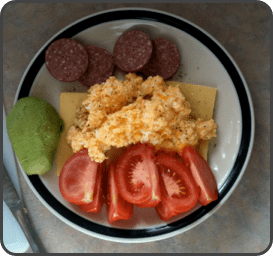
So for me breakfast is always based around eggs. If I have time I will make  an omelette. Cheese and peanut butter is a particular favourite. With practise you can get pretty quick at this. If I’m in a rush I will scramble the egg and just dump it on the other ingredients. So for instance – put some cheese on a plate, peanut butter on top and scrambled egg on top of that. Some slices of tomato and you’re done. I can get that together in not much longer than toasting some bread.

If I’m flying out the door I just get some cheese and salami or some such thing. Often I go without. Once on this sort of diet you can often wake and not feel hungry.

Another approach is to boil a load of eggs and have them in the fridge. Throw together some hard boiled eggs, cheese, tomato, avocado.

If you really have time then a good old cooked breakie is great – sausage, bacon, egg and black pudding.

Kippers is another great one for breakfast. I go through phases of loving these and then not. Currently not really going for kippers.

Finally one of the easiest approaches is to cook surplus dinner the previous night and have it cold the next day or just cook additional meat / fish and use that in your omelette or with scrambled egg the following day.

LUNCH

Next toughest one. Heading out to a sandwich bar doesn’t really work. When I worked at a desk I would take a big salad for my lunch. I’d make up enough salad for a few days and leave it in the fridge. I’d make up a load of dressing but not put it on the salad. Each morning I’d fill my tuppaware with salad, add some protein (tuna, chicken breast, whatever. I’d often keep some meat aside from the previous nights meal) and add the dressing. When in heavy training this was HUGE. The guy that sat next to me once timed me and it took 45 minutes to eat.

If you’re stuck and need to go out to buy lunch – sashimi is a good option or find a supermarket – cooked meats, prawns, olives, cherry tomatoes etc…

DINNER

Probably the easiest – just do what you’d normally do but miss out the starchy veg, pasta, rice. If you have a partner / family that wants that just cook it up separate. We’ll often do cabbage, leeks or broccoli instead of the past or rice. Works just as well. At my sisters she’ll do bolognese, the kids have a little pasta with it the rest of us just have a bowl of the bolognese with cheese on top.

Most nights we have a big lump of protein (any meat really or fish) with either salad of non starchy veg.

DESSERT

Not necessary but we do often have it. If you stick with this you’ll lose your sweet tooth and fruit will suffice. we’ll often have fruit salad with FULL FAT yogurt (hard to find these days) or cream. If we’re really trying for low carb a favourite of mine is to mash a banana with peanut butter (Look at labels as some add sugar and vegetable oil. Meridian do a great peanut only peanut butter. We get cheap peanut butter and blast our own peanuts in the food processor and mix it all up). On top of this we may add some berries but always add some nuts (to add crunch) then cream on top – the richest I can find.

Cooking is done with butter, lard or dripping. Natural oils. Never with vegetable oil but occasionally with cheaper olive oil. You shouldn’t cook with virgin olive oil.

Always add dressing to salads and butter / olive oil to veg. Salad dressings – no vegetable oils. In deciding on oils think of what would be relatively easy to get – butter, dripping and lard for sure. Olive oil and cocunut oil I’ll use. Chuck out margarine and vegetable oil.

SNACKS

Tricky as well – few options. When travelling we’ll hard boil a load of eggs and take them with us together with nuts, almonds etc.. We’ll also often cook up some chicken drumsticks or thighs. A lot of these can be found when out and about. I also eat pork scratchings and peanuts. If you’re trying to lose weight be careful with peanuts as they have a lot of carbs compared to other nuts (they’re not really nuts either but thats by the by for this). Macadamias, almonds, walnuts are much better but also less available and more expensive.

If you follow this diet you will realise how much the food for sale is influenced by govt dietary advice – so many low fat products, endless isles of grain based products and milk has been messed around with so the fat doesn’t separate and even “whole” milk has less fat in it than natural milk does. For me this tampering with our food is very worrying indeed as I’m sure no one really knows what the long term effects will be though rising obesity and diabetes surely are signs of whats in store. If correct advice had been given for the past 30 years I’m sure there’d be no problem finding low carb food and snacks.

I find that most of the time I can train for Ironman on this diet. I wouldn’t go assuming you need to keep stuffing carbs whilst your training, instead test it and see. In the past in my Ironman build I’ve gradually increased the amount I’d ride before food. I’d ride first thing without breakfast and on one occasion built to Ironman Distance without food but I misjudged it and did 130 miles before arriving at my cafe stop. Doing this I feel is a good exercise as you get to know the feeling of going at a pace that you can pretty much do indefinitely on your fat stores. I also believe it helps make you a fat burner. For riding I would suggest there are three types of ride

1. Rides for fat burning as I’ve just covered. Maintain low carb

2. Rides to practise race nutrition – these should be hard effort to mimic the race and allow you to test your feed strategy – these will have you eating lots of carbs

3. All other rides – here you need to establish what you need to keep you going. For group rides have something in your pocket just in case until you are confident of what you can handle. I more or less never carry food in my pockets even on group rides. I will eat when I stop and will often have serious carbs – eg a muffin with a coffee, sometimes I stay low carb – peanuts, pork scratchings. This year i’ve decided to stop having diet drinks which has found me going back to what I always had when riding as a kid … milk. A litre of whole milk (sometimes I add cream) and a cookie tends to be enough mid ride to see me through even if I’m doing intervals. My experience is loads of carbs middle of a ride isn’t an issue as you will use them up but be careful having too many near the end of a ride. So… if the coffee stop is in the middle have a muffin, if the coffee stop is at the end have your full fat latte and leave it at that.

There’s always lots of publicity about getting your carbs in immediately after exercise. I don’t really follow this as I don’t feel it makes sense and my experience is my ability to train next day seems completely unaffected by when i eat after a session. My view is that the key thing after a session is fats and protein to allow repair of your muscles. Some carbs to replenish glycogen stores but I just don’t imagine it’s going to be that much. Eat based on hunger – if you’re hungry when you get in then eat, if you’re not don’t go forcing something down. Again this sort of thing is easy to test yourself – try different approaches and make a note of how you feel training the next day.

Posted in Nutrition | Tagged | 1 Comment

Laymans Nutrition

Most of us probably believe we eat a healthy diet or at least know what constitutes a healthy diet. It’s out there, the message is pressed left, right and centre. Eat your Five a day, avoid saturated fat, low fat, control calories, eat from the “Eat Well Plate” (I remember when it was a pyramid). This advice has been around for decades yet ill health (eg diabetes, obesity) has increased at an alarming rate during that period. Surely if this advice was truly healthy we wouldn’t see this. Perhaps the majority are not following the advice? I don’t think so. Just try to shop in a supermarket and not follow this low fat high grain advice. I would argue the majority are following this advice.

This alone should be enough to make us question whether the advice we’re been given by government and through the media is really good advice. Over the past few years I’ve read and researched extensively and come to the conclusion that a healthy diet is quite different from that which you find in the popular media sources. In the hope of provoking thought and questioning here’s my laymans logic to diet.

Wild animals don’t have someone giving them health advice (note I say wild, farmed animals often have their diet decide for them and would appear to suffer more disease than wild ones) they eat the food available to them in their environment. This is healthy because it is what they evolved with and are thus adapted to.

It would seem sensible to eat what we’ve evolved to eat ie those food sources that would have been available to our evolutionary history. We talking a LONG TIME – pre agriculture so you need to think of processing in the broadest sense (ditch the past, bread etc..). We would have only been able to eat what we could catch, pick or pull out of the ground. If you apply that to your weekly shop you’ll be well on your way. I try and forget the “advice” that’s at every turn in the media. I remember back to my childhood – meat and two veg was the norm and that is a good start. I once heard it said don’t eat anything your great great grandmother wouldn’t have considered food. That certainly works.

We are told that if we want to lose weight or stay trim (or be healthy in general) we should avoid fat and calorie count. It’s obvious right that fat makes fat? A 3,500 calorie deficit will lose you a pound in fat. Common sense right? Not if you think more closely. It’s oft quoted that the first law of thermodynamics proves this. “Conservation of energy” There are some massive assumptions here – not only that we can accurately measure energy in and energy out but also that our body is some perfect machine that manages eek out every calorie of energy given to it as food. This is clearly nonsense – I’m sure oil is calorie rich but you won’t get fat eating it. Also, if this was true, with so many people trying it surely we’d hear of endless success stories. Even if we could accurately measure the calories in food that are available to us and what we burn would it really answer the question why am I overweight ? An analogy I heard was if someone asked why is that restaurant always full and you said because more people entered than left you wouldn’t think that’s a very good answer. Why do some foods make us want to eat more of them ?

Laymans logic again, and back to evolution. Imagine the availability of carbohydrates (carbs) verse fats and proteins. High carb foods would have been available seasonally, for limited time and would be difficult, if not impossible, to store. Fats and protein would be available year round in the form of meat. It would be an evolutionary advantage if carbs didn’t make us feel satiated (ie we can easily overeat them) and any excess be stored as fat. It would also be good if fats and protein made us feel full as these would be the only foods available in times when food supply was low (Ie winter). Certainly this is my experience and it’s something you could try for yourself. Just two weeks out of your life avoiding carbs.

I hear regularly that our brains need carbs but again does it make sense? If that is true then everyone on a low carb diet would be going out of their minds. They’re not, so either there are enough carbs in a low carb diet (it’s virtually impossible to get no carbs) or we don’t need them. That fact we can live healthily without carbs has been known since the early 1900s when Stefansson subjected himself to a one year experiment in the Bellevue Hospital New York.

If you’re going to count anything count your carbs and limit them I’m convinced you’ll feel healthier for it.

Posted in Nutrition, Triathlete Europe | Leave a comment